February Tempest Challenge Day 5

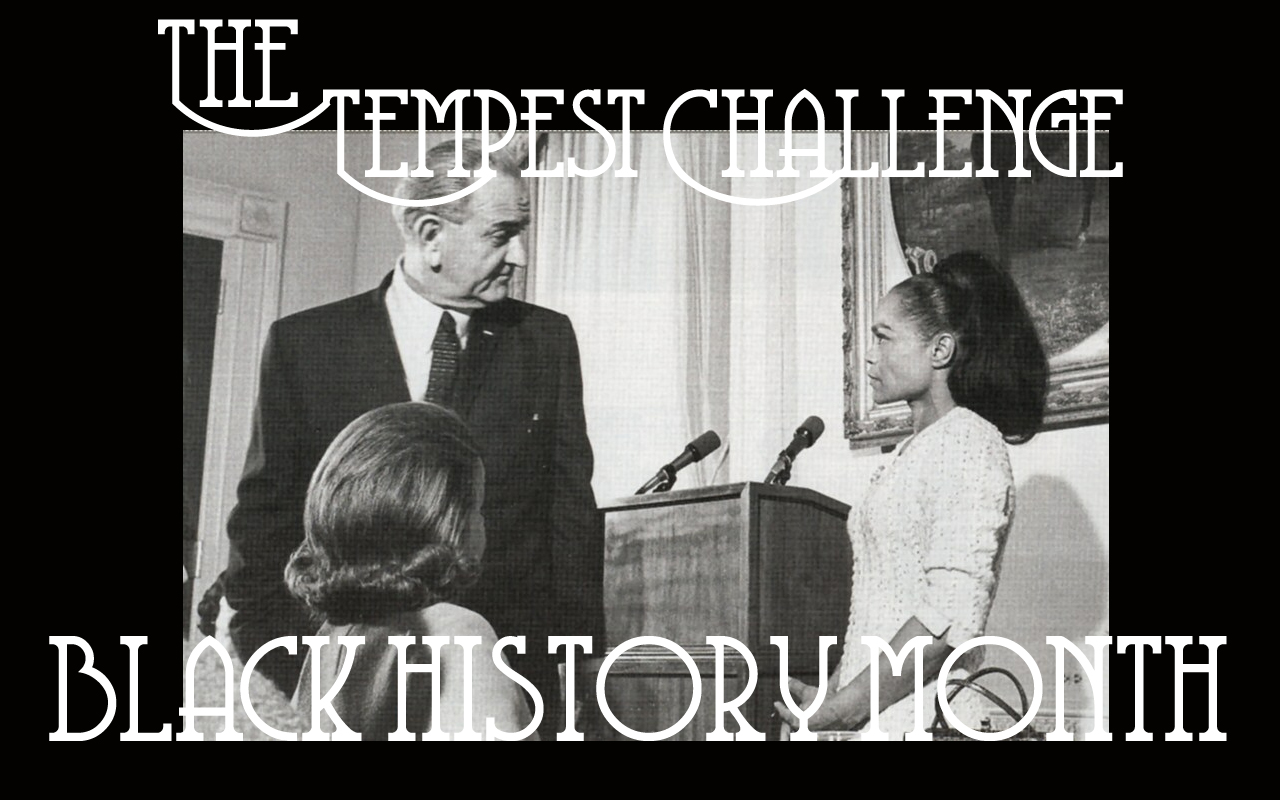
Eartha Kitt’s Biographies | Tempest Challenge BHM

It’s hard to speak truth to power and to stand up to folk who seem like the most powerful folk around. Doing so often leads to severe consequences. And yet it remains one of the most important things an individual can do.

Eartha Kitt knew this well:

Kitt became a leading light in the civil rights movement in the 1960s but when she condemned the Vietnam war on a visit to the White House her career in the US ended and the CIA branded her “a sadistic nymphomaniac”. —The Guardian

The CIA, people.

If you don’t know about this incident, here’s a short video on the subject.

The fallout from this lasted years and drove Kitt to Europe for decades. And all she did was ask a simple question that amounted to “Do Black lives matter as much as white ones?”

If you don’t know much about Eartha Kitt beyond Batman and Santa Baby, then it’s really worth tracking down one of her biographies. It looks like they’re all out of print, but many are available on Amazon. She wrote several over her long life and career, and some of the later ones are more easily obtained for reasonable prices.

Read about her life in her own words, about that incident with the Johnsons, about the backlash that ensued and how it felt to be targeted for being Black and having the nerve to speak your mind. And then do what’s in your power to follow Kitt’s example. Hathor knows we need more people like her right now.

February Tempest Challenge Day 4

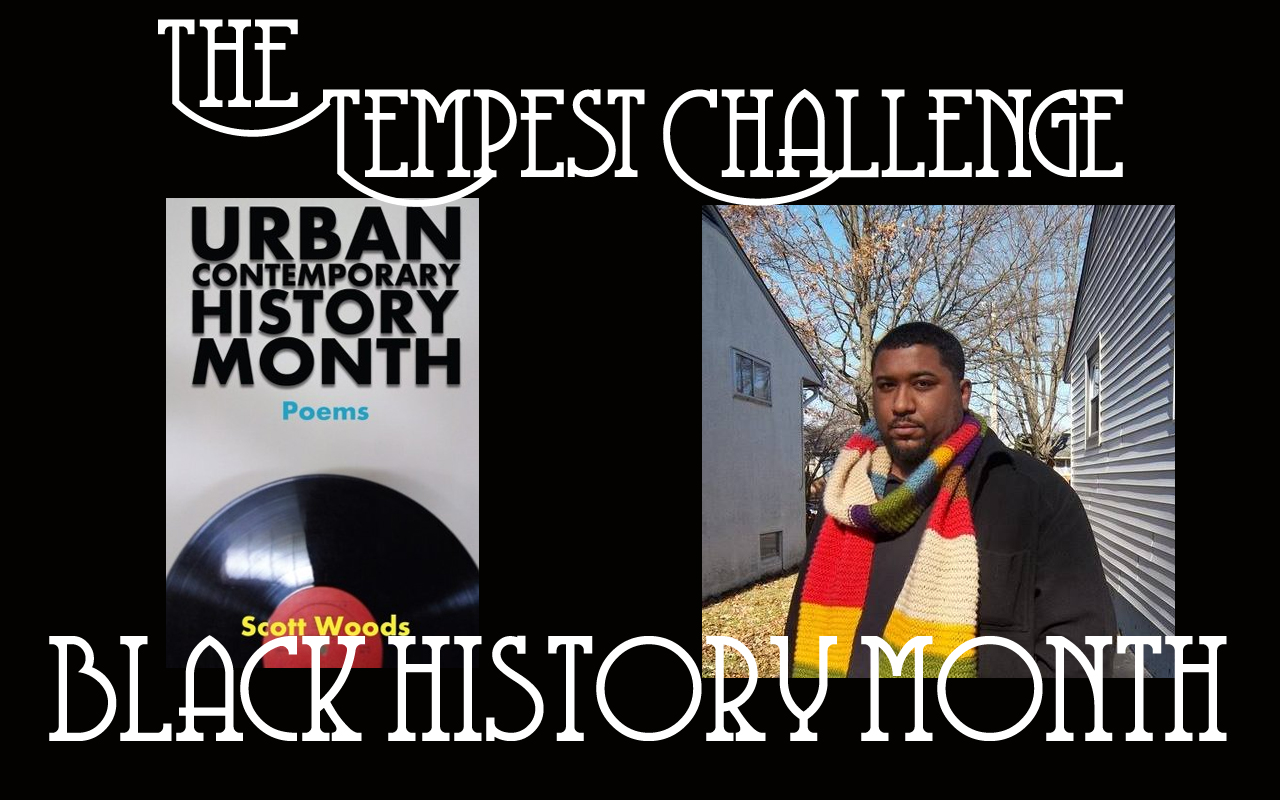
Scott Woods: Just Read Everything He Writes | Tempest Challenge BHM

Just in case you didn’t think I was serious about how I want you to read all kinds of stuff by Black people this month, I bring you a recommendation that isn’t just about a book. I challenge you to read Scott Woods. Just all his stuff. Everything. Don’t hold back.

Scott is many things: a slam poet, a cultural critic, a dude who does not mince words, a true artist. He has two books of poetry out now and soon (hopefully very soon) he’ll have a novel out in the world. I’ve read a draft of that novel. It is fucking fantastic. I cannot wait for it to be out in the world so everyone gets a chance to read it.

Until then, you’re just going to have to satisfy yourself with his other writing. Like his blogs.

Those of you who joined me in the hate pile-on for the movie Gods of Egypt may remember me linking to Scott’s essay on the matter: Gods of Egypt is the most racist film ever.

Gods of Egypt is the most racist film in the last one hundred years. It is the most diabolically conceived, politically incorrect, and unapologetically racist film since The Birth of a Nation (the 1915 white one, not the 2016 black one, and how cool is it that we have to clarify that now?). It is more racist than Song of the South and Soul Man, which is no small feat. It is more racist than Mississippi Burning, The Revenant, The Help and Dragonball Evolution. It is more racist than the eye-rolling Bringing Down the House and The Last Samurai. It manages to somehow be more racist than Blended and Dances With Wolves. It is more racist than Dangerous Minds and its didn’t-bring-shit-to-the-party cousin, Freedom Writers. It is magically more racist than The Green Mile. It has unseated my standing favorite, The Lone Ranger, for most racist movie, and I thought Johnny Depp’s Tonto was going to get us to at least 2020.

His writing is funny and insightful and deep and engaging and you cannot read a bunch of it and come away not understanding that Scott is everything.

And then you read his poetry.

And then you listen to him perform his poetry.

So, here’s what to do next. Go to Scott Woods Makes Lists and subscribe. Then go to Scott Woods Writes and subscribe. Then go to his YouTube channel and subscribe. Then check out Urban Contemporary History Month and We Over Here Now, his poetry collections. Read. It. All.

You can thank me later.

Description, Dialect, and Dialogue Course at LitReactor

New Class: Description, Dialect, and Dialogue – Writing the Other

Nisi and I continue to give online classes through WritingTheOther.com and on top of that we’re expanding to new platforms in order to reach more writers. This year we’re starting with LitReactor and a class on Description, Dialect, and Dialogue. It costs $199 ($179 if you’re already a member of the LitReactor community) and starts February 23rd.

During our WtO classes, students always ask us how to describe skin tone without using food metaphors or facial features without falling back on problematic cliches. When we do exercises around this and other aspects of description, we find that many writers unwittingly use words that reveal unconscious bias. We also see them struggle to depict dialect or regional dialogue without flattening characters into caricatures.

We cover all of this in our regular classes, but since this is such a big anxiety point for many writers, we decided that our first LitReactor craft class would focus on these specific aspects of writing the Other. It’s only 2 weeks, it’s structured so that you can read the lectures and do the hands-on exercises at your own pace. Plus, students will leave class with resources to hone their skills further.

Register at LitReactor or pass this on to any writers you think may be interested.

February Tempest Challenge Day 3

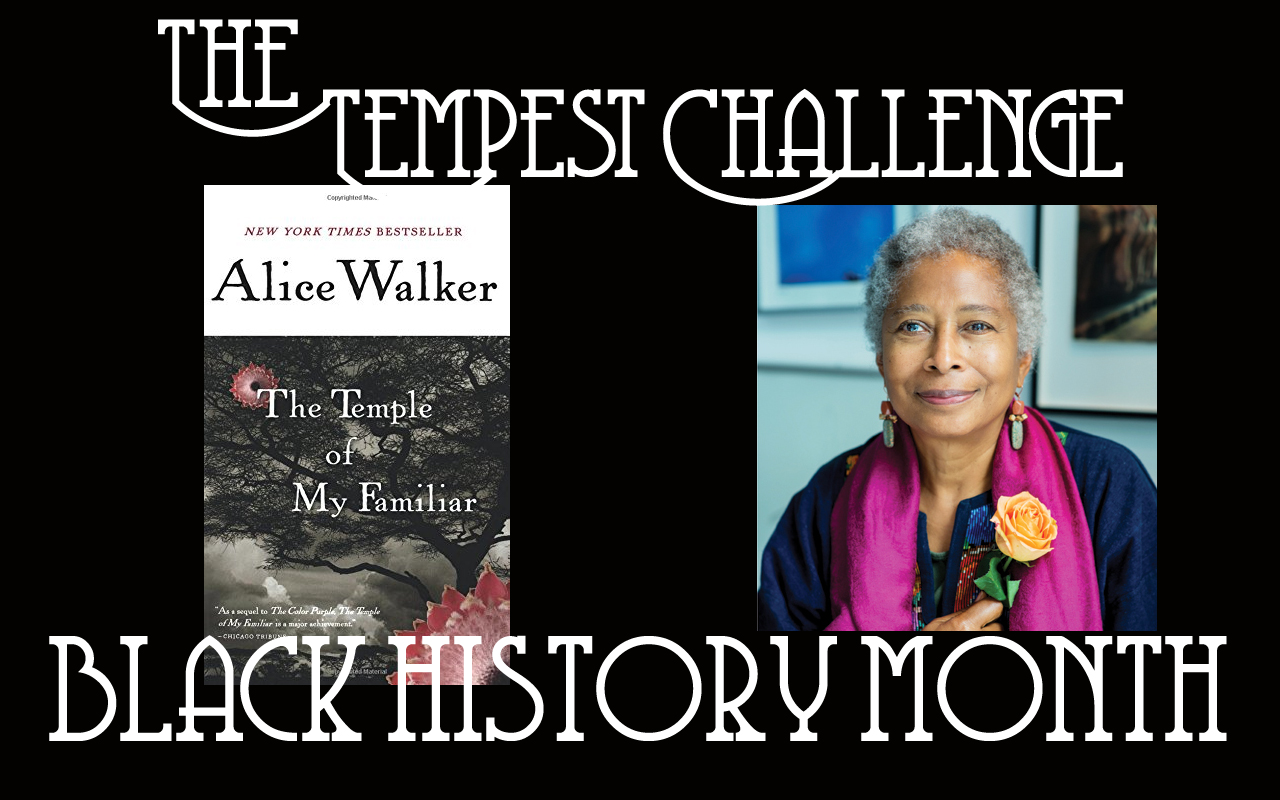
The Temple of My Familiar by Alice Walker | Tempest Challenge BHM

Even people who don’t know much about Black authors know who Alice Walker is or just that the book The Color Purple exists. If you haven’t read that book or watched the movie, you should. Right now. Then, after you’re done, pick up The Temple of My Familiar.

Temple is not exactly a sequel to The Color Purple, though some characters from that book do appear in this one. It’s also not a book that’s easy to classify. It weaves in and out of the lives of several characters across many timelines and, in some cases, many lifetimes. I read the book when I was a teen and didn’t fully grok it, yet also never forgot it. When I read the book as an adult I still didn’t fully grok it, I just appreciated it more. Walker plays with character and structure in this book in ways that are not always successful but are always engaging. The best part is that each of the characters represents some different way of being Black, a rare thing in American novels.

After you finish this book, go read all Walker’s other books because she’s Alice freaking Walker, people.

February Tempest Challenge Day 2

Black Women in 19th Century American Life | Tempest Challenge BHM

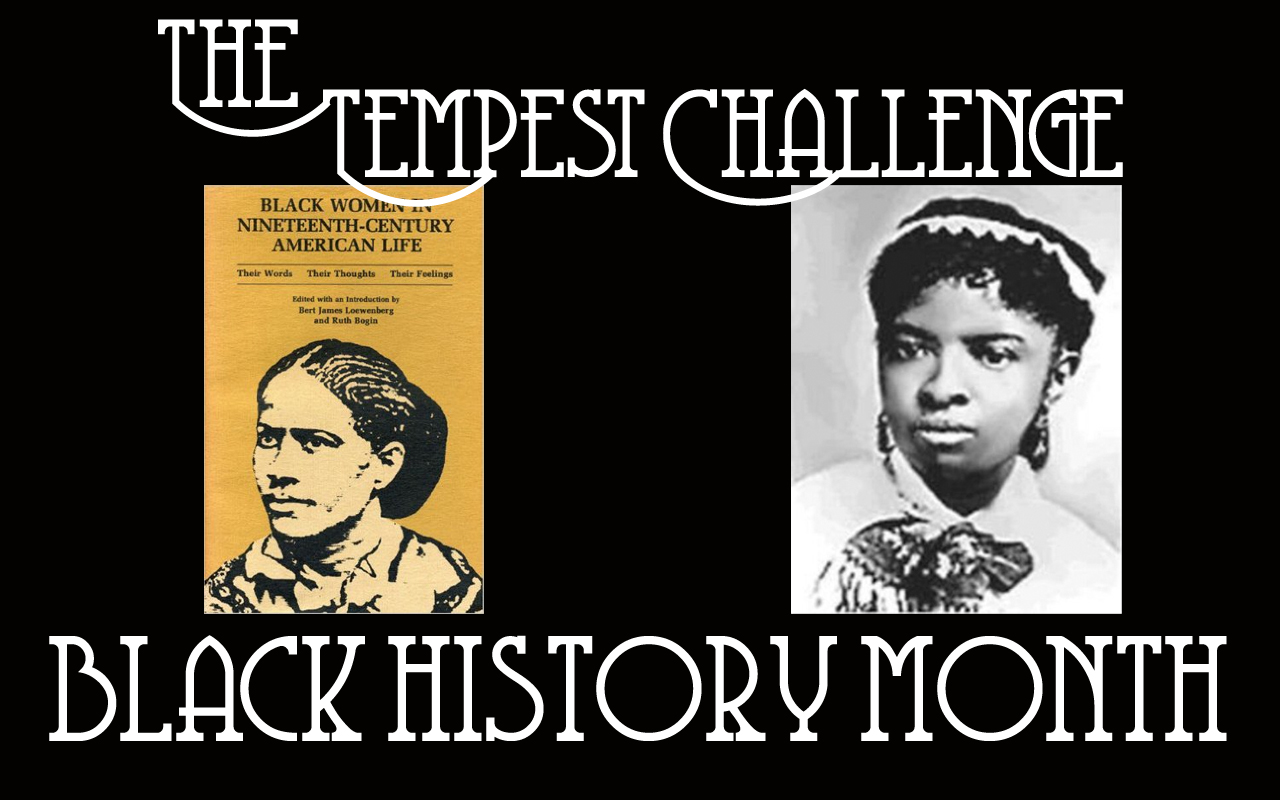
A couple of years ago I wrote a piece for NPR Books highlighting literature that proves Black people existed in certain time periods (despite popular misconception) and that, where they existed, they were more than just The Help. My favorite of the books I mentioned is Black Women in Nineteenth-Century American Life: Their Words, Their Thoughts, Their Feelings. I like this one best because it’s a collection of contemporary writings by these women, not just about them. One of the best ways to understand history and the people in it is to read their own words.

The biggest reason I wanted to include this book is because it contains the writings of Dr. Rebecca Lee Crumpler:

The first African American to publish a medical text… also the first black woman to earn a medical degree. She wasn’t alone in this for long; within a few years she was joined by Rebecca J. Cole and Susan McKinney Steward, and by 1900 there were also Matilda Arabella Evans, Ida Gray Nelson Robbins, Eliza Ann Grier, and Sarah Parker Remond.

For Remond, her career as a doctor was a second one. She was a prominent lecturer and abolitionist who traveled throughout the US and to Europe to lecture against slavery, rouse foreign support for the Union cause, and advocate for freedmen once the war ended. She retired to Florence, Italy — where she earned a medical degree and set up a practice that lasted for 20 years. She never went back to America.

Did you ever learn about this woman in school? I sure didn’t. Just like we didn’t learn about Katherine Johnson, Dorothy Vaughan, or Mary Jackson of Hidden Figures fame.

February Tempest Challenge Day 1

Tempest Challenge: Black History Month Edition

Black History Month 2017 has already gotten off to a dubious start, at least in Washington. Not that this is very surprising. Within that rambling mess of a speech you may note that the specific names mentioned are the names we always hear during February’s festivities–King, Parks, Tubman, Douglass–names that reflect the narrowness of most Black History teachings. Most white people (and, sadly, far too many Black people and other POC) will only hear about Slavery and The Civil Rights Struggle as if these are the only two significant periods in Blackness and as if the people associated with those eras are the only people worth remembering. This is bullshit, of course. Let’s change that.

The Tempest Challenge has been on a hiatus, and the vids will continue to be as I work out what I want to do with that project over the long term. For this, though, I don’t need vids, just a blog.

Here’s what I challenge you to do every day during the month of February: Read something by a Black person that isn’t only about pre-Civil War American slavery, the Civil War, or the Civil Rights Era.

Read fiction, non-fiction, articles, letters, whatever, as long as it’s written by a Black person. Don’t limit your definition of Black Person to African-Americans. Black covers the African diaspora and writers currently in Africa and is not limited to people descended from those brought to the Americas as slaves.

This month I or someone who is awesome will offer you suggestions for what to read. Feel free to drop your own suggestions in the comments. Use the #TempestChallenge hashtag on Twitter or Instagram to share your favorite reads.

To get us started, my first suggestion is The Space Traders, a short story by Derrick Bell. You can read it online or you can pick up a copy of Dark Matter: A Century of Speculative Fiction from the African Diaspora and read it there.

There are two pieces of fiction that so effected me that they jacked me up for years after reading them. The first was Kindred by Octavia Butler. The other is The Space Traders. Thought they’re very different stories, the reason they jacked me up so hard is the same. They are both so true that it scared me as a Black person. With Kindred, I easily pictured myself as Dana and thought about what would happen to me if I found myself in her position. I didn’t think I would have survived. It scared me to think that. With The Space Traders, I pondered what would happen if the incident that kicks off the story happened in America right then (I first read this in the early 2000s when Bush 2 was in office) and realized that it would play out as written, which was an upsetting thought.

Bell published this story in 1992. One might have been lulled into thinking that it wasn’t prophetic during the eight years Obama was in office. I challenge anyone to read that story today and tell me that it’s not entirely possible.

If you don’t think so, then you don’t know your Black History.


Tempest at the Ocean

Where to Find Tempest in 2017

My Tempest World Tour continues, and this time it actually includes more world, I promise!

I’m heading back to Portland, OR, in March to stay for several months. Though, as you’ll see, I won’t actually be there much in March. This summer I’ll likely then spend a few months in Seattle. Once fall rolls around I’ll be looking for a warm weather place t spend the rest of the year.

AnomalyCon March 17 – 19th, Denver, CO

I am going to be a guest at AnomalyCon in March! I’m very, very excited out this. My first time as a guest at a steampunk con.

I’ve had a peek at the program schedule and it is PACKED with good stuff. And the other guests? Soooooo many amazing people I really look forward to seeing: Milton Davis, Tanya DePass, Zetta Elliott, Stant Litore, Ken Liu, Seanan McGuire, Ekaterina Sedia, and a bunch of other folks I’m looking forward to meeting for the first time.

By the time the con comes around I may even be ready to offer the attendees a sneak peek of the steampunk novel I’m in the midst of writing. If you’re dying to get a glimpse of it now there will be a post coming up about that later this week.

International Conference on the Fantastic in the Arts March 22 – 26th, Orlando, FL

Right after AnomalyCon I’m off to Florida for ICFA. I plan to be around town for about a week after ICFA, so if you Orlando peeps wanna get together, ping me now.

WisCon 41 May 26 – 29th, Madison, WI

This year I’m helping to coordinate the POC Dinner and POC Safer Space. More deets to come!

Writing Excuses Workshop and Retreat (& Cruise!) July 28 – August 5th, 2017  + WorldCon August 9 – 13th, Helsinki

I will once again take part in the Out of Excuses cruise. I had a fabulous time last year (I should have blogged about it… more blogs, my first Resolution) and anticipate an even better time this year.

This cruise is a European one and timed so that if you’re going to WorldCon in Helsinki you can go from the boat to the con with a few days in-between to catch your breath and take your time getting there. And yeah, I’ll be at WorldCon, too.

I am not one of the official instructors at the workshop, though I may do a breakout session and put in some one-on-one time. The real reason to go is the amazing lineup of authors and editors and agents, which includes Ken Liu and Aliette de Bodard and Desiree Burch and a bunch of other fancy people. The way the cruise is structured, there will be plenty of time for conversation and writing together and some fun offshore excursions.

You can check out all the details on the registration page. It does cost some money. There will be scholarships this year as there have been in the past. Details on that are coming, I believe. I’ll update y’all (I promise… I do!).

If you can’t do the cruise but are coming to WorldCon, let me know. I have no set plans at the moment, don’t even know if I’m going to be on programming. We have some time to work it out.

After WorldCon I could be persuaded to hang around in Europe if anyone is dying to have me as a houseguest. ;)

This is all the stuff that’s confirmed so far. I also really want to go to Sirens and am heavy planning on it, but that’s not set in stone yet.

How many of you will I get to see this year?

On WisCon, and Who Is Allowed To Feel Welcome

Before WisCon I was having a conversation with a person who used to come to the con but does not, anymore. I asked why and they said, “WisCon isn’t fun, anymore,” and I thought about that for a while.

This person is not the only person to have expressed such a sentiment to me before that moment. I’ve heard from others over the years, usually people who have stopped coming since MoonFail1 but a few are people who stopped coming in the last couple of years during the major shakeup that started with FrenkelFail and that the con is still emerging from.

  • WisCon isn’t that fun.
  • I’m not comfortable there.
  • I feel unwelcome.
  • I don’t like the vibe, anymore.

I’ve listened to these people and, in some cases, internalized these complaints and thought about whether or not there is something that needs to be done.

That’s what happened right before the con got started. I internalized that person’s issues.

And then the POC Dinner happened.

Okay, I say happened like Woop, it appeared! No. I organized it this year, as I have done in many previous years, and several wonderful and amazing volunteers helped me out at con.

The room was packed. I think we had 80 people all told. It was loud. There was so much joyous conversation and laughter. It was a room full of People of Color and Native folk having a good time and I loved it.

Loved it even though I stress myself out a bit every year trying to pull it together. Because each year since it went from being an informal lunch to a coordinated dinner in 2009, more and more and more POC have come to the con. We’ve had to switch locations and food plans and even how we collect the money many times to accommodate all the people who come. I can’t really complain about that.

Because there is this beautiful space, this wonderful moment, right before the con gets underway where we can all be together and see each other and know that the people in the room have our backs at the con.

Every year someone or two someones or half a dozen someones comes up to me to say:

  • Thank you.
  • This was amazing.
  • I’ve never experienced anything like this at an SF convention before.
  • I never felt so welcomed and like I belong.
  • When I first heard about this I thought it was gonna be 20 people but it was so many!
  • I didn’t think a con could be like this for a person like me.
  • This meant the world to me.

Almost as long as we’ve been having a POC Dinner, we’ve had the POC Safer Space at the con. It’s a place where POC and Native people can go to just be around each other and have discussions about our own stuff. A place where we acknowledge that we come from many different backgrounds, even as we all huddle under this one umbrella, and that it’s important to be able to talk and have community and decompress away from the white gaze. That doesn’t mean we’re all only ever going to be in that room—we came to WisCon, after all, and want to participate in all of it. It does mean that there are still people at the con giving us reason to want to talk amongst ourselves.

Every year I hear from people:

  • Thank you for that space.
  • Thank you for fighting for that space.
  • It was important for me to be able to process what happened on that panel.
  • It was crucial that I have somewhere to go besides my room so I could be calm and safe but not alone.

When I first started coming to WisCon in 2003 there were a handful of non-white people in attendance. I don’t think I counted that year. I did the next year. Still a handful. Other folks remember when it was a literal handful—five people out of 800-1000.

This is still the case at a lot of other SF cons right now. Small, midsized, local, regional, large, allegedly global…

People who go to them can often count the POC because they stand out. They recognize (or think they recognize) those people the next time and the time after because they are so few. That was WisCon. Until we changed it.

I think it started in earnest around 2009 after that horrendous winter of RaceFail and a bunch of white folks showing their asses on the Internet. Some of those white folks were WisCon regulars. And some of us were determined they weren’t going to chase us away.

The first time I came to WisCon I knew I wanted to come every year, again and again, for the rest of my life. Yes, there were few brown people. I was used to that. Yes, there were incidents around me and my brown-ness. I was used to that. It was much less terrible than WorldCon. And the wonderful experiences far, far outweighed the unpleasant ones. The panels were amazing, the speeches were amazing, the people I met were amazing.

I wasn’t gonna give that up over Faily McFailerson and her cronies.

I wasn’t the only one to feel that way.

More people of color started to come because they wanted to meet this one person, because they had a friend going, because high profile brown folks told other brown folks to come and see how a con could be.

They came and saw that WisCon wasn’t a perfect con but that it had potential. That there were some panels about POC-specific issues. That there was a group of us who tried to make it our business to be welcoming. And when those moments of the con going south happened, some of us made it our business to fight to make change to that WisCon could be a better space for everyone. Everyone.

I say again: Everyone.

Unless.

Unless you’re a person who makes a space worse for certain people. People you know you can step on because they’re stepped on everywhere. People who are marginalized even in spaces that are supposed to be a refuge for marginalized people. But you know, like I know, that there are hierarchies, and intersections, and even in a feminist space some feminists are “less important” than others. Or, at least, that’s how things were for some for a long while. Until we changed it. And that right there is what’s making some people mad. And the people mad about that? Are not going to see WisCon as a better space for them.

Kanye Shrug

Oh well.

Because here’s the thing: 99% of the people I have seen or heard complaining about how WisCon isn’t comfortable for them and WisCon isn’t fun are white people. Not 100%. But 99%. It’s a bunch.

You know what else I’ve noticed about the people making these complaints? A lot of them are cisgender, a lot of them are men, a lot of them are people with privilege along multiple axes. Funny that.

And while it makes me sad at any time for folks to feel excluded, or like a space has been taken away from them, I have to say:

Where were you when this was other people feeling this way?

Where were you when people who are marginalized in nearly every other fandom space and came to WisCon thinking it would be different said they felt uncomfortable, unwelcome, threatened, unsafe?

I don’t remember seeing some of your faces when the fight for the Safer Space happened2. I don’t remember you chiming in when a guy on the concom3 was abusing members of the concom (those who weren’t his friends…) and then people at the convention. I don’t recall you having any kind of problem when volunteers were leaving left and right because they were treated horribly by the “Old Guard” runners of the con4. I don’t remember you standing up to the woman the co-chairs had to ban last year5 because she verbally abused everyone from hotel staff to volunteers at the reg desk every single year6.

I don’t even remember some of you ever saying “Hey, I’ll do some work to make WisCon run smoothly for all attendees.7

Meanwhile, the people who I and others have worked hard to make feel welcome and relatively safe and empowered to report incidents of microagression or just plain old aggression have said:

  • Thank you.
  • This was so important to me.
  • How can I help?
  • You do so much and you look exhausted, can I get you something?
  • Can I be part of making this all work next time?

As N K Jemisin said in her speech at WisCon 38: “If you won’t ride or die for anyone else, how can you expect them to ride or die for you?8

I ride or die for the people who have felt uncomfortable and pushed out and marginalized historically in this community, and at this con. I ride or die for the people who have come to me, sometimes with tears in their eyes, to tell me they’ve never felt more welcome and wanted and embraced by a con before this one9.

I am not unwilling to ride or die for all y’all. I’ll say it again: I want WisCon to be a better space for everyone. I want you to surf this wave of change with us. But only if you’re willing to make the con better for both you and yours as well as me and mine, she and hers, they and theirs, Jackie an’ ’em, and all the other folks who want it to be great for all of us together.

If you’re uncomfortable now, but weren’t before, then think about that. Really think about it. Consider if you were making people uncomfortable before, even without thought or intention. Consider that you’re feeling left out because, in the course of our claiming a space for ourselves, we made clear to you just how much you or people like you contributed to our pain, our lack of fun, our lack of safety. Ponder the puzzle of how a con dedicated to feminism, populated by many amazing people, somehow ended up being a place where people who weren’t the right color, the right class, the right age, the right level of ability, the right gender presentation felt like they didn’t fully belong. And delve deep into the mystery of how fixing that problem is the thing that’s made you run away10.


Footnotes

  1. For context, please read my post and Jim C. Hines’ follow up post. []
  2. Yes, this is something that we had to fight for. And the person talked about in the footnote below this? Was the main person fighting against it. I believe the spectre of a lawsuit against the con if the Safer Space happened was brought up in public to other concom members. []
  3. There’s an entire other post in the footnotes to follow. I felt it was important to give actual names here. If you say “I feel uncomfortable/unwelcome at WisCon because of what you did to Richard Russell”? Then what you’re saying is you feel unwelcome because Richard violated the Statement of Principles, which we explicitly made apply to the concom and not just the convention itself. You’re saying you side with a person who routinely abused concom members who were younger, who were not white, who were essentially not the friend group/local community he was a part of. And while you may have heard all kinds of stories from Richard about what we did and why, the bottom line is that he was told, repeatedly, over years, to stop. He did not stop. He was told, repeatedly, over years, why his words and actions were harmful and harmful mostly to People of Color on the concom. He did not stop. He was told, repeatedly, that his abusive behavior drove volunteers away from the concom and attendees away from WisCon. He did not stop. And let’s be clear on one point: We didn’t ban him from WisCon, we removed him from the concom because he was abusive. So if you feel unwelcome because of what we did to Richard Russell, then you are okay with Richard making others feel unwelcome and unsafe. And to that I say: Fuck you. []
  4. Once again, I am gonna name names. In my post, Sometimes Allies Are Bad Actors, I quote Mikki Kendall pointing out that just because a person has done work, good work, for the con, for fandom, for the people they love, doesn’t mean they can’t be problematic and doesn’t mean they have treated everyone equally. Jeanne Gomoll started WisCon and has been a friend to many people and has done much good work. Jeanne also sometimes shit all over the work and contributions of WisCon volunteers and concom members who were not in her friend group/local community (do you see a theme emerging?). There were people who tried to volunteer and felt disrespected and dismissed by Jeanne and then left because of that. There were people who left upset because of Jeanne’s unwavering support of Richard Russell, who, as I have mentioned, was verbally abusive to members of the concom. But not to her. But not to her friends. And so we were terrible people for deciding that members of the concom had to be held to the same standards of conduct that we hold our attendees to. And so Jeanne decided to leave the concom over this. No one tossed her out. Another long time WisCon runner? Hope of ConSuite fame. Another person saying far and wide how horrendously the new WisCon runners have treated her. Hope harassed the person who took over running the ConSuite (a position Hope vacated officially a month before the con last year) several times during WisCon 39 and had to be restricted to food access only so she had less opportunity to harass folks there. She then repeated this behavior at this year’s con. And, beyond that, my understanding is that there were volunteers that felt some kind of way about how Hope treated them for years and years. Not a new problem. So if you’re feeling unwelcome because your good friend Jeanne or your good friend Hope were drummed out of WisCon and made to feel unwelcome, then what you’re saying is that the people they harassed or made to feel unwelcome don’t matter. That it only matters how they feel, because they’re your friends. And to that I say: Fuck you. []
  5. The woman’s name is Alyson L. Abramowitz. She was banned last year for screaming at the hotel staff before she even got to WisCon. This was not out of character for her, since she’s been yelling and screaming at hotel folks, Reg folks, and plenty of other folks—volunteers and attendees—for all the many years she’d been coming to the con. This is why she was banned. And, when it happened, so many people went: phew! Glad she’s not coming. She made my con experience terrible when I was around her. One of those people was me. If you feel unwelcome because your good friend Alyson was so cruelly banned from the con for making other people feel unwelcome, then you’re saying that her behavior towards others doesn’t matter because she’s your friend. And to that I say: Fuck you. []
  6. We had a panel at WisCon 39 in which a lot of the stuff from the above footnotes was discussed. Here’s a Storify of the live tweets from it. []
  7. Anyone wanna place bets on how many people will respond to this by saying: “But I did do yadda yadda!” and ignore the qualifiers there and everywhere in this post? []
  8. Just want to point out here that Nora publicly left the concom because of MoonFail, and that her experience and reaction was emblematic of the way many people felt. Those volunteers I mentioned in footnotes above? The ones who left because of the Bad Actors? Listen to what Nora has to say and then multiply by many. []
  9. There’s an entire side conversation to be had about how, years ago, this was the experience of many of the (now) long-time attendees. A con the centers feminism? Where we talk about women and science fiction and writing? There’s nothing like this anywhere else! How many of you experienced that back then? Why then do you not understand why this is important for the people experiencing it now? []
  10. There are a ton of links I want you to read in relation to this post:

wiscon

Find A Tempest @ WisCon 40!

The WisCon Feminist Science Fiction Convention is coming up this week and I am all up in it. I’m on a ton of amazing panels, I’m organizing a bunch of things, and I aim ready to have a good time.

However, I do want to direct people to this blog post from a year ago about microaggressions and WisCon I feel like it’s important to bring up again ahead of the con.

I also want to send a signal flare up to the POC and Native folk coming to the con: Are you aware we have activites at WisCon just for us? If you aren’t, ping me. I’ll give you all the deets1.

Okay so…. this year I’m one of the Program department deputies and so I put myself on too many panels. As always… Here’s my schedule:

AMA with GOHs (aka Ask Me Anything Live with the Guests of Honor) | moderator

Sat 10:00 – 11:15AM | Capitol A

Have a question for Guests of Honor Sofia Samatar, Justine Larbalestier, or Nalo Hopkinson about writing craft, writing life, or their fiction? Come to this Ask Me Anything session with your questions!

#KeepYAKind and Other Nice Tools of the Oppressor | moderator

Sat 1:00 – 2:15PM | Assembly

There is always a point in the midst of heated Internet discussions where someone lifts their voice to make a call for Kindness, Niceness, Civility, or any other adjacent concept. These calls often go up when the issue at hand concerns an individual with privilege being called out by folks with significantly less privilege or cultural power. And Kind, Nice, and Civil become synonyms for Keep Your Mouth Shut. When this happens again, what tools can we use to dismantle this toxic dynamic and get back to the core matter? Are there secret code words we can deploy to neutralize the terms?

Panelists: Becky Allen, Betsy Haibel, Justine Larbalestier, Mark Oshiro2

Podcasts for Beginners | moderator

Sat 4:00 – 5:15PM | Conference 1

So you want to start a podcast. You have a computer, a mic, and Skype. What else do you need? What does good editing software cost? Where’s the best place to host? How do you get your podcast listed in all the right places? A panel of seasoned podcasters is ready to answer your questions, give great advice, and probably pop their Ps.

Panelists: Tanya D., Keffy R. M. Kehrli, JP Fairfield

Analog and Digital Writing Tools3 | moderator

Sun 8:30 – 9:45AM | Conference 1

Writers, bring your favorite writing tools—laptop, tablet, quill, or steam-fueled ideatron—and share the pros and cons of your favored method of writing with others! We’ll talk software, hardware, analogware, old-fashioned methods as well as new. If you’re willing to share your beloved your writing gear, others may be eager to give them a try.

Panelists: Dylan Moonfire, Kristine Smith

Afrofuturist Narratives Outside Of Literature | moderator

Sun 10:00 – 11:15AM | Capitol A

Janelle Monae’s albums tell the story of the android Cindi Mayweather, fugitive and freedom fighter. Sun-Ra explored the past and future of Africans and people of the diaspora through music, poetry, and film. Nick Cave’s Soundsuits evoke the strangeness of aliens while drawing on multiple cultural traditions around sound, dance, and design. Let’s explore the different mediums in which afrofuturist artists are expressing and engaging with the future, blackness, and art.

Panelists: Bill Campbell, Nalo Hopkinson4

SIX SEASON SERIES BASED ON THE THREE-PART TRILOGY BASED ON THE SINGLE BOOK OF THE NOT ANOTHER F*CKING RACE PANEL | Vanna White

Sun 4:00 – 5:15PM | Wisconsin

The eighth installment of this popular and amazing panel! Writers of color working in F/SF face unique challenges, it’s true. But, at the end of the day, being a “person of color” is only one aspect of what makes up our identities as writers. While it’s very flattering to be asked to be on panels, most of these panels never crack the ceiling of Race 101. With that in mind, wouldn’t it be nice for multiple writers and fans of color to sit on a panel that isn’t about race at all? Here’s our chance to do just that. So, what are we gonna talk about, instead? Practically anything! Presented in game show format, SIX SEASON SERIES BASED ON THE THREE-PART TRILOGY BASED ON THE SINGLE BOOK OF THE NOT ANOTHER F*CKING RACE PANEL brings together writers and fans of color to get their geek on about any number of pop culture topics—none of them race related.

Panelists: Jackie Gross (ladyjax), Sumana (brainwane) Harihareswara, Nalo Hopkinson, Emily Jiang, Michi Trota


I didn’t start out moderating all of these panels, then somehow I was moderating them all….

Come to my panels, go to the many other amazing panels on the schedule, go to the readings, come to the speeches. I’m telling you, it’s going to be fabulous this year.


Footnotes

  1. Not giving all the deets here because racist trolls sometimes comes by and have feelings about the stuff we do. []
  2. Can we talk for a second about how stoked I am to be on a panel with these people? Because I so am. []
  3. Or, as I like to call it: The Write Gear live []
  4. Yaaaaaaaaaaaallllll these panelists []
Nisi and Tempest writing the other

New Class! Writing the Other – Weekend Intensive Summer 2016

Nisi and I are teaching another Writing the Other Weekend Intensive! These classes take place from Friday night to Sunday night and are a super concentrated version of our longer classes. They’re designed for folks who can’t do a full 6 weeks or can’t come to a retreat but can carve out one weekend.

This class is appropriate for all writers, not just novelists or speculative fiction authors. The topics we cover will benefit comic writers, playwrights, screenwriters, YA writers, litfic writers, and more.

Also, writing inclusive fiction isn’t just about race or cultural appropriation (we do of course cover that), it’s also about writing people who come from any identity different from yours, including gender, class, physical ability, religious or spiritual background.

If you want tools to help you write characters different from you in significant ways sensitively and convincingly, this class is for you.

Writing the Other – Weekend Intensive Details

When: June 10 – 12, 2016 (detailed schedule on the ticketing page)
Where: ONLINE via Google Hangout
Price: $250 + service fee
Registration Begins: April 30

If you want a reminder when registration opens, join our announcement list. And if you missed this class, that’s also the place to go to get notifications when we do it again.