Getting More Writers of Color to Workshops: A Modest Proposal

Getting More Writers of Color to Workshops: A Modest Proposal

Taking a break from talking about the Hugos and Jonathan Ross for actual important stuff.

A few days ago I tweeted:

Writers of Color, raise hands if you want to attend writing workshops but can’t afford one financially.

And I got many responses. One of the reasons I asked is because I wanted to point out again why the Writing Excuses Carl Brandon Scholarship was important and encourage people to apply1. Then a couple of responses made me realize I needed to do something else as well.

@cafenowhere That’s me. With added complication of being main care giver to a child & living in the Midwest.

@LonAitewalker *raises hand* compound that with being disabled as well – double whammy.

Lack of funds isn’t the only barrier. There’s the inability to miss work for a week or weeks at a time, or not having anyone to leave a child with for that time, or other obligations that make going away to a workshop not possible.

As other responses point out, going to a workshop can be a life-changing experience. Not only do you gain valuable writing instruction, you also get valuable networking done and face time with authors who are generous with their advice and influence. Workshopping is an important element in developing a career. It’s not necessary, it’s just very helpful.

So how can we make workshops more widely available to writers who are more likely to miss out on these opportunities? A few good ideas I’ve seen lately:

One Day Workshops: Clarion West does these occasionally (and lately doing more of them). They usually involve tackling a particular subject, like how to research or how to create more immersive fiction, take place on a weekend day, and cost a fraction of what the 6 week workshop costs. The downside is that they only take place in Seattle for now. I hear that there are discussions to expand into…

Online Classes via Google Hangout: I’ve heard of several writers doing this, but the only class I’m at all familiar with is Mary Robinette Kowal’s. She does two types, a weekend intensive (Friday night to Sunday) and an 8-week course that meets one day a week. Since they take place online you don’t have to travel and it may be easier to structure your time even if you have caregiving obligations. Click here to see explanations for her workshops, which will give you a good idea of how most are run.

Neither of these solutions is absolutely perfect and will work for everyone. They go a long way toward helping, though. More one day workshops in other cities and towns mean more people can attend. Doing things online through Google Hangouts open it up even more–you don’t even need a webcam, just a mic2. Then we’re back to cost.

These workshops are far less expensive than the long 6-week ones like Clarion or even retreat-type workshops like Out Of Excuses. That doesn’t mean they’re that much more affordable since the cost is still in the hundreds for many. Scholarships are needed here as well.

I have a request for pro authors giving workshops and organizations coordinating workshops. Would you be willing to set aside one registration per workshop for a writer who cannot afford it but would greatly benefit from attending? Could you perhaps work with an organization willing to help coordinate some of the particulars, like matching writers who want to attend with appropriate workshops?

People involved in organizations and community groups that raise awareness around diversity in the genre, would you help out by doing some of that coordinating? Or even setting up scholarship funds so that the workshop runners still get paid?

This could end up being a major project for some non-profit, but major projects take time to build. As that happens, if that happens, I’d still like to see some smaller efforts to help build momentum. Such as workshops deciding to set aside that one registration. Or writers helping each other raise money individually. A larger project like Con or Bust would be great in the long term. I just don’t want people to think we have to wait for that to come together in order to get started.

So let’s discuss this! Here in the comments, on social media, at cons, wherever. This is just the spark of an idea. Help me grow it.

Oh, and apply for the Writing Excuses Carl Brandon Scholarship! Applications must be in by 3/15. If you can afford the time but can’t afford registration, hotel, and travel, the scholarship covers those things.


Footnotes

  1. BTW – People, apply! Deadline Is 3/15 []
  2. You do need a reliable high-speed connection, and not everyone has that, I know. []

Con or Bust Auction Begins Today!

It’s that time of year again. The Con or Bust auction is on, and you can bid to win some seriously fabulous stuff ranging from awesome books to fiction critiques to swag of the highest order. All proceeds benefit the Con or Bust fund which “helps people of color/non-white people attend SFF conventions” by providing financial assistance. If you don’t know why this an important and worthy thing, ask me and i’ll explain it.

Before I get into the links to the stuff you should definitely bid on, I also want to say that if you are a person of color who really wants to attend a specific convention this year but cannot, please do request assistance. You do not have to be financially destitute to ask for or receive assistance. I bolded that because I want to make sure everyone pays attention. There are many reasons why you may not be able to attend a con (including that you are budgeting for other, less expensive for you cons) but really want to because it could be supremely beneficial for whatever reason. You are totally allowed to request money, so please do. The whole reason Con or Bust exists is so that the community benefits from your presence at cons as attendees, audience members, programming participants, and volunteers.

With that out of the way, I wish to call your attention to the following awesome auction lots that you should totally bid on!

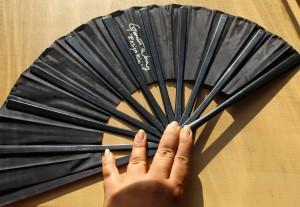
Fancy Fan Signed by Star Trek’s Garrett Wang

Garrett Wang Signed This


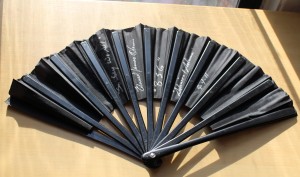
Fancy Fan Signed by BSG’s Edward James Olmos

Edward James Olmos so totally signed this

Yes, that is the type of fan I usually carry. It has the dragon design on the other side, but what you really should care about is that these fans were actually touched by Olmos and Wang. The DNA is still on them!

I also put up collections of magazine back issues that I no longer need (but are too good to just toss) that includes some very pretty issues of Weird Tales and all of the print issues of Fantasy Magazine. Check them out here.

Here are some other great auctions not submitted by me:


Pearls Before Swine – Or, Why I Bother

Just read this really excellent post at Mother Jones by Phil Plait answering the asinine questions put forth by some of the Creationists who attended the Bill Bye debate at the Creation Museum. In the comments you right away get people saying “Good on you for doing this, but why bother? Those people are so stupid and it’s a waste of time to explain things to them.”

This immediately brought to mind a comment on my post from yesterday about making an POC scholarship FAQ wherein Saira basically said the same thing –“Pearls before swine”–and said she’d rather focus on other things. I totally respect that and I say do what you have to do for self care and where you can be most effective. But I get that a lot of from people, the Why Do You Even Bother, about issues ranging from racism in the genre community to sexism in tech. My reasons are probably similar to Phil’s.

Reading through Phil’s post I learned things I didn’t know before, and that’s awesome. Any time someone wants to educate me about science I am there. Even if I don’t specifically go looking for it.

Also, I’m fairly sure that the reason the creationists in the Buzzfeed article asked such ragingly stupid questions is because no one has ever bothered to answer them seriously before. I know why that might be. Like I said, the questions are really stupid.

stupidquestion

So stupid they can inspire rage. Or stupid enough that it makes people shake their heads and think This Person is Not Even Worth It. Not everyone has the spoons to deal with crap like that.

If one does have the patience to answer and explain in a real way it helps both the person asking the stupid question and it helps people who have to deal with the kind of people who ask those stupid questions. They can either offer up the knowledge as they understand it thanks to the helpful answers and info behind those links or they can say: “This post over here answers all of that and more, go read it and stop talking to me.” Drop that link and mambo, people!

That article will not change every mind. It may not change more than a tiny fraction of minds right away. It will help some people to think, though. And perhaps if they get more information from other people, the new thinking will start to sink in. I know this can happen because I’ve seen it.

At the beginning of my post yesterday I mentioned my friend who was appalled at the Butler scholarship when he first heard about it and then came around later? That didn’t happen magically. It happened because I took the time to explain things to him and argue and challenge him. And I wrote about issues of race on a regular basis, which he saw. And it wasn’t the next day or week or month that he came to me saying “You were right and I am sorry for how I reacted,” it was long after. I didn’t change his mind right away or even all by myself. I helped.

Other people have come to me over the years, usually at conventions, and told me how they, at first, thought I was SO WRONG about race and the community and so angry and every other thing I’ve heard said about me over the years1. But then their anger and defensiveness went away they and they pondered and listened and read other people saying the same things and finally came to a better understanding. They usually thank me or apologize or both. Doesn’t happen super often, but it happens enough that I keep doing this.

Even if Phil Plait only changes a handful of minds, I still say that his effort is worth it. I’m going to the comments section of Mother Jones to say so right after writing this. And then I’m going to go bookmark every single thing on the Con or Bust auction site I want to bid on. Because I also agree that there are many ways in which to make a better world, and I try not to get mired in just one of them.


Footnotes

  1. I know for a fact that people say some pretty shitty things about me behind my back. A lot of it worse than what they say to my face, if you can believe it. What those people might not know is that many of the nice white people and chummy men they think they have such a rapport with are actually my friends, too, and often inform me of these conversations so I can laugh and laugh. []

This Is Why White People Can’t Have Nice Things

This Is Why White People Can't Have Nice Things

Years ago when the Carl Brandon Society first announced the formation of the Octavia E Butler Scholarship for Clarion and Clarion West, I got into a heated argument with a white, male friend over the need for such a thing to exist in the world. At the time, I was surprised–shocked, actually–at his vehement objection to this scholarship. It wasn’t right, wasn’t fair, excluded people like him, and was likely some reverse racism. We argued, got nowhere, and stopped talking for a while1. It was my first time engaging with a person on an issue like this, it was not my last.

Just last month I found myself in the position of explaining the need for a scholarship specifically for People of Color yet again after the announcement of the Writing Excuses/Carl Brandon Society retreat scholarship. If you scroll down to the bottom you can see my very long response to several comments, most of which boil down to:

This isn’t right, it isn’t fair, it excludes white people like me, reverse racism!

And then today I looked at the comments2 of the io9 post about the Con or Bust auction to see yet more white people complaining that such a thing exists. Giving people money to go to a con based on skin color! What about all the white people like me who can’t afford to go! I haven’t noticed a lack of diversity at the one con I go to! Reverse racism!

It makes me want to facepalm and headdesk at the same time.

Since it seems that this is going to keep happening over and over until the aliens arrive to solve all our problems or take a select few of us off to an otherworldly paradise, I wondered if it would be useful to put together a general FAQ. Instead of battling the seven-headed hydra that is the comments section on any post of this nature, why not crowdsource answers to the most common questions/complaints/ridiculous screeds? Then when someone is Wrong on the Internet, you can drop the link to it and mambo away DJ Older style.

FAQ topics could include:

  • Rebuttal to any comment about how it’s about “skin color”
  • Reverse Racism!
  • I’ve never noticed a need for this, therefore there is no need for this
  • I’m poor and white, how come no one is offering to give me money to attend cons/workshops/retreats?
  • What about women/LGBT/people from outside the US/any other group I can name? Why doesn’t your scholarship/grant cover these groups? Aren’t they minorities, too?
  • Not everything is for you, white people

Please do add any others you can think of. Suggest a FAQ topic, answer, or both in the comments. Your answer can be a condensed version of an existing blog post you wrote or found to be useful. Be sure to include a link for further reading.

Oh, and: get ready for the Con or Bust auction! There are so many awesome things!


Footnotes

  1. That particular friend later on realized his error and apologized to me and we resumed our friendship. []
  2. I heard tell that Will S showed up in the comments but don’t see him now. He might have gotten moderated into oblivion, but be aware that he may return. []

It’s sort of like an Exquisite Corpse…

It's sort of like an Exquisite Corpse...

There’s a long-term project I want to do with the Interstitial Arts Foundation, but it will require quite a bit of coordination and people power, so I’m not entirely sure how to get it started. However, I know I have about 7 million intelligent and creative friends who might be able to help out or point me in the right direction or give advice, so I decided to post my idea here.

So far the IAF has done several great projects to support interstitial fiction and writing about interstitiality. There are the anthologies, Interfictions and Interfictions 2, and the magazine Interfictions online. We’ve done two auctions where we asked visual artists and crafters to create art based on the fiction, but we’ve never done the reverse and not a lot with interstitial art outside of literature. This isn’t because the IAF is only concerned with lit, it’s more to do with who is doing most of the volunteering and driving the projects–i.e. artists whose focus is mainly writing.

This project will eventually grow to involve artists from all the different disciplines and will start with musicians. The idea is to invite musicians, singers, and songwriters to create songs, symphonies, sounds, or whatever else they’re moved to do based on interstitial fiction. Just as with the last auction, we can provide copies of stories from the Interfictions anthologies. Plus, there are now several available online for free. This time, we won’t limit it to interstitial writing published by the IAF — musicians can base their music on any piece of writing they see as interstitial. I know there’s a list of interstitial fiction around somewhere that we can dig up.

Once all the musicians involved are done and the music available to all, we can move on to the next artist group. My thinking is that we ask dancers and other movement-based artists to create a short performance or dance based on the music. Then, once those are complete, maybe visual artists create art based on the dances or textile artists create clothing for the dancers. And on and on until we hit multiple artistic disciplines and perhaps, way down the line, bring it back around to writers.

This could turn into quite a big project, thus the need for excellent project management. We’d need at least two people to coordinate who are musicians themselves and have contacts in that community. One of these people should be familiar with how rights work and help us craft the best way to present the idea to musicians. The IAF wouldn’t want exclusive rights to publish the music, but would like the ability to include the song on a compilation album of our own. Plus, we want other artists to be able to freely build upon the music for the next step in the project.

There are probably other considerations I haven’t thought of–please let me know your thoughts in the comments. Does this seem like a doable idea?

Wiscon 38 Panel Brainstorming Post

Wiscon 38 Panel Brainstorming Post

NOTE: If you’re coming for the first time, here are the panels that still need work:

—————-

Panel submissions for WisCon 38 close soon, and I have many ideas! I know many of my friends have ideas too, but might need some help brainstorming or fleshing them out. Thus, I have created this post.

Anyone who has an idea can put it in the comments, not just me! Let us know what you need, such as: making a kernel of an idea into a full-fleshed panel, help crafting an effective description, coming up with a punchy title, or finding fellow panelists so you can submit a pre-populated idea.

It will make discussions easier if you put one panel idea per comment (make as many as you want) and then folks can reply below each in the thread.

That’s it, let’s have fun!


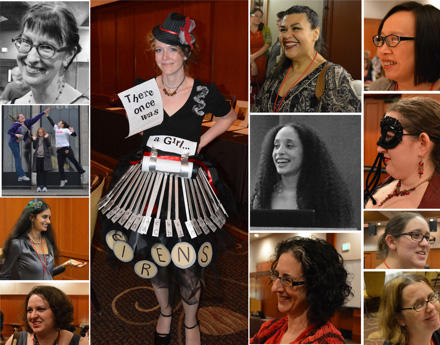
Some faces from Sirens 2013

I Spent Two Weeks Attending Two Women-Focused Geek Cons And It Was Pretty Awesome

Some faces from Sirens 2013

I love going to science fiction/fantasy conventions. It’s one of the biggest drains on my wallet throughout the year and I regret nothing. I love talking about SF/F media and literature with other people who love it the way I do.

When I first started attending the WisCon Feminist Science Fiction Convention, it was the only women-centric SF/F I’d heard of. Over the years, I got wind of others and friends encouraged me to attend two in particular: Sirens, an academic conference and retreat on women in fantasy literature, and GeekGirlCon, a convention celebrating women in media, science, and technology. When I found out that these cons took place on consecutive weekends in cities just four hours apart, I knew it was time for a lady geek excursion.

Avoiding the Rocks

I started my female-centric con experience with the Sirens conference, which takes place at the Skamania Lodge in Stevenson, WA. It’s a 40-minute drive from Portland, OR through the Columbia River Gorge. Driving along roads that cut through forests laden with turning leaves and close-clinging clouds that occasionally parted to reveal stunning waterfalls is the perfect way to get into the retreat mindset. By the time we crossed the Bridge of the Gods I knew I was heading to the perfect setting for a weekend of discussing fantasy literature.

Sirens is a very small conference with a narrow focus and only about a hundred women in attendance this year. This intimacy, combined with it being a conference and not a convention, gives Sirens a different vibe than most cons I’ve attended. There’s an emphasis on group discussions (not just panels), meals together, and individual keynotes each day. The narrow focus on academic discussions of women and fantasy literature gets even more specific in the keynotes and sessions that take on the yearly themes: warriors, faeries, monsters, retelling, and, in 2013, reunion.

Another thing affecting the vibe: a nearly complete lack of men. There were only three or four attending, so the conference space was almost exclusively women. (There may have been trans* or non-binary people whose gender I did not know, as well.) This might not seem unusual for a con that boldly announces the high presence of girl cooties up front. And if you’re familiar with academic conferences that focus on women’s issues, this won’t surprise you. It might if, like me, you’re from the world of SF conventions where even the most girl-cootie-filled among them (WisCon, for example) can still attract a decent number of guys.

Each of these elements contributes to the idea of Sirens as a “Safe Space” for women. Over and over conference organizers and attendees emphasized that point, and there is obvious pride in Sirens being the type of gathering where people can disagree yet still sit down to dinner together. Still, there are varying ideas of what makes a space safe.

As a woman of color, I don’t always find spaces created by white women or white feminists to be safe. Same with geeky or fandom spaces. Navigating the con scene means quickly assessing if a space is actually safe for me regardless of the label on the tin. It’s not often that someone sets out to make me uncomfortable or unwelcome at a con. Instead, I’ll encounter an unwitting microagression. Or, a person with no concept of their privilege, let alone how to check it, says or does something upsetting. That wasn’t my experience here.

I ended up pleasantly surprised at the depth of the attendees’ knowledge and interest in fantasy literature that goes beyond the white/white-washed epic tomes so often held up as great examples of the genre. Everyone I met was eager to understand different points of view and experiences of the world beyond their own. Nowhere was this clearer to me than in the Q&A sessions after the guest of honor keynotes by Alaya Dawn Johnson and Guadalupe Garcia McCall. Both women of color gave deeply personal speeches full of intersectional ideas and the understanding and solidarity they received back from the room impressed and bolstered me. This is the kind of space I feel safe in.

Meanwhile, At New York Comic Con

That same weekend my friends back home went to New York Comic Con. Each time I hopped on Twitter or Facebook to see how things were going, I discovered some new instance of harassment. It made me glad I was on the other side of the country.

There had been concerns prior to the con that one or more groups of dudes looking to entertain their fellow dudebros on YouTube might come to NYCC for the express purpose of harassing women there. Between the self-styled Referees of Cosplay who intended to call out women “too fat” to dress up as their favorite characters, the guys kissing women without permission so they could film their reaction, and the horrid SiriusFM-affiliated Man Banter dudes engaging in both sexist and racist harassment, the weekend was chock full of fail.

The good aspects of the con didn’t always balance out the fail for some people, especially women targeted for harassment. The swift action of the NYCC organizers to address the harassment is praise-worthy; it just doesn’t address the underlying problem. Even though Mike Babchik is banned, there are plenty of other men ready to take his place. And these men feel that New York Comic Con is an appropriate venue for their activities.

Thinking about why that might be, and the contrast between my friends’ NYCC experience and my Sirens experience got me thinking about the kind of conventions I attend and why. I only go to NYCC because I live in NYC, and even then only if I get a free press pass. I used to wish I could go to San Diego Comic-Con, but I prioritize my budget toward attending WisCon, World Fantasy, ReaderCon, or DragonCon. I stopped going WorldCon regularly several years ago. I would rather clean toilets than attend either PAX.

All of these cons cater to what I love — though the focus, vibe, and general purpose differ — and are ostensibly safe spaces to be a giant geek. Yet I do not feel that my geek self is welcome or wanted at SDCC, NYCC, PAX, or WorldCon.

Women Are Ambassadors

After San Diego Comic-Con I saw this quote, attributed to Hannibal‘s Bryan Fuller, popping up around Tumblr:

“What was really great about Comic-Con, it shows that the core demographic is young women… It’s all young ladies. Women love genre, they’re more open to genre in a strange way. … Women are the ambassadors.”

This is not new information. It’s also not just anecdotal. When Networked Insights measured social media response and engagement around the media being discussed at SDCC in 2013, women made up the majority. Brett Schenker’s compilation of statistics from Facebook show that 40% of the people who Like comic-related things are women. Facebook’s Doctor Who fandom is mostly female, according to this data. Women make most tech buying decisions, download more movies and TV shows than men, and play more games on certain platforms.

In his book “Comic-Con and the Business of Pop Culture,” Rob Salkowitz points out that “women today are the loudest and most compelling voices in fandom.” Yet the average media, comic, or science fiction convention is generally dismissive of, if not hostile to, the non-cis, het male population.

I could bring up a mountain of examples, but here are three:

SDCC 2011: Batgirl vs. DC Comics

ReaderCon and WorldCon 2012: Renee Walling vs People Who Don’t Want To Be Sexually Harassed

PAX 2013: Dickwolves vs All Common Sense

This crap is flying at women from all quarters: con attendees, con runners, con guests, con sponsors. It’s not surprising that more conventions and conferences now exist to offer respite from the nastiness. Sirens is one approach, GeekGirlCon is another.

Re-Centering The Focus

GeekGirlCon, now in it’s third year, is a more varied convention. It’s similar in style and scope to media and comic cons, though throws the net wider than most by including science, technology, engineering, and math (STEM) alongside literature, games, comics, TV, movies, and more. For such a young con I’m impressed with how ambitious GGC is in terms of providing a space for everything from tabletop gaming to professional networking, all with a focus on women.

That said, GeekGirlCon is a work in progress. The con’s track record on intersectionality is muddy, starting with the first year. A friend of mine warned me off this con because she got a strong vibe that she is not the “right type of geek girl” due to being POC. That was more about the attendees than the con itself, though this year a swell of anger rose up when people learned that problematic career feminist Amanda Marcotte was invited to participate in programming. As I said, work in progress. After talking to members of the staff and geeks involved in the community around GGC, it seems the con is worth the work and is also important on a larger scale.

At the Changing Culture in Mainstream and Alternative Spaces panel, I and my fellow panelists talked about the value of cons that focus on sub-sections of the geek community, such as women or LGBT people, and whether it’s better to create our own safer spaces or to try and make the mainstream conventions a better place for all geeks to be. Ben Williams, a founder of GaymerX/GaymerCon, spoke about how separating from a larger, less inviting culture has big benefits in helping people feel like they really belong.

However, Jo Jo Stiletto pointed out that even creating your own thing — in her case, roller derby — for your in-group doesn’t mean that it won’t grow and change into something that no longer feels right for you. Game designer Shoshana Kessock advocated for changing cons from the inside because she feels that if we completely withdraw, then the mainstream will only see geeks as the stereotypes we leave behind.

I can understand that point of view and I am often an advocate of changing instead of abandoning the cons I love. It can work; just look at how WisCon and ReaderCon have shifted in the past five years. However, there’s a big difference between those cons and PAX or SDCC, entities that aren’t as susceptible to big changes enacted by dedicated volunteers. I say the only way to force a change in that type of con is to starve them of their lifeblood: geek money and attention.

There Are A Lot Of Men Here

That’s where cons like GeekGirlCon come in. Here you have all the same kinds of events and panels and activities as other cons but with women at the center of the conversation. In this environment women hopefully feel like their voices and experiences and way of geeking out are celebrated and appreciated. If you listened to the common wisdom about centering women, you’d think that this type of con would result in a low male turnout. Not as low as Sirens, of course. But guys wouldn’t flock to this type of environment, would they?

Uh, yeah, they would.

There were far more men at GeekGirlCon than I expected and they participated at every level: on staff, on panels, and as attendees. And yet GGC people also spoke of the con as a Safe Space. Again, the idea of what is safe differs depending on what type of woman you are, yet I was pretty confident that there wouldn’t be anyone there saying that they “want to buy an umbrella [that comes] with an Asian girl,” no matter the gender. It’s not about banning or even discouraging guys from coming to the con, it’s about making it clear what is and is not valued that leads to a con women can feel safe attending.

So forget any ridiculousness you hear about how cons that cater to specific or marginalized groups are all about self-segregation. They’re not — not completely. Because if the con has all the elements geeks flock to cons for, it will attract all the geeks. And if these cons can attract geeks away from events that foster a hostile environment, then those other cons (and the media entities that support them) will either have to change or die.

There Are A Lot Of Women Here, Too

I’m torn on which option I want: Change or Die. The cons that represent the most problematic environments — NYCC, SDCC, PAX — aren’t the kind that I like to attend, anyway. I much prefer cons that are for the people attending and not media companies and sponsors looking to sell and market to us. Cons where fans and creators can share panel space and where attendees are treated with respect and not like cattle to be herded. And, after my two-week women-centric con adventure, I’m more reluctant than ever to go to cons that center the 18-49 year old, white, heterosexual male, explicitly or not.

Neither Sirens nor GeekGirlCon are perfect events and could benefit from a little change themselves. And I want to be part of that change. Because making a con better for me and women like me means making cons that are better for everyone. Guess I’d better start saving up now.

originally posted at xojane.
Writer Fears About Writing The Other: Here’s How To Get Over It [Updated]

Writer Fears About Writing The Other: Here's How To Get Over It [Updated]

Here’s one of the great circular conundrums of our time:

We need more characters of color/LGBT characters/characters with disabilities/characters that aren’t the default white, able-bodied cis male in commercial literature.

I, a fiction author, am afraid of writing characters of color/ LGBT characters/characters with disabilities/characters that aren’t like me or from my cultural and social understanding because I might get it wrong, and if I get it wrong people will be angry at me and yell and also ruin my career.

I’ve seen and heard writers (mostly white) express some version of that at least a hundred times since RaceFail 09. They point to that discussion or any number of other public Fails since then and go: SEE?! You see? That’s what happens when we try!

There are a few things about this that need addressing. First, large, public Fails actually happen when authors don’t try. Second, the problem is rarely that the author tried and didn’t get it exactly, 100% right. It’s that they failed and then acted like an ass when someone pointed it out to them. Third, avoiding author Fail isn’t as hard as some people make it out to be.

Most importantly, the consequence of being ruled by that fear is that you aren’t helping with the first problem. And if I may be so bold, I think the issue of representation is far, far more important than individual fears of getting it wrong. I also know that it’s hard to tackle that first issue without also addressing the second. Luckily, I have the solution.

You can attend a Writing the Other class, seminar, workshop, or retreat in person or online1. You can find upcoming classes on the Writing the Other Tumblr or get notifications about them via this mailing list.

[UPDATE: The retreat mentioned here is over, but there are new classes listed on the Tumblr and on my sidebar under Classes.] Next summer I’m teaching at the Writing the Other workshop/retreat alongside Nisi Shawl, Cynthia Ward, David Anthony Durham, and Mary Robinette Kowal. Tomorrow, registration for this workshop opens up. If you are the type of author who has been held back from addressing the issue of representation in SF by fear that you’ll get it wrong, this workshop will give you tools to help you get it right. There’s no guarantee that you will always, 100% get it right if you attend this workshop. I am confident that at the end of it you won’t be 100% ruled by fear.

Registration opens tomorrow, October 13th, at 12pm Eastern. The workshop fee is $500 and includes meals but does not include accommodations. Click over to the Eventbrite page to see all the details2.

How many of you will I see there?


Footnotes

  1. This section of the post has been edited and updated from the original version. []
  2. This workshop has come and gone! Join the mailing list to get a notification if we do it again or when we do online classes []

Inspiration | Resonance: The Art of El Anatsui

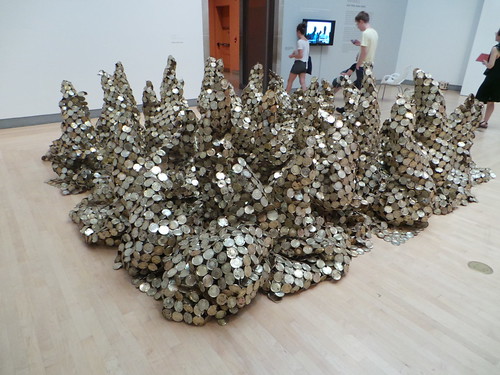
Peak (2010) by El Anatsui

A couple of weeks ago I saw an amazing exhibition of works by Ghanaian artist El Anatsui at the Brooklyn Museum. Anatsui takes found materials like metal and wood — considered trash by most — and turns them into amazingly flowy pieces of art that evoke cloth and drapery and alien landscapes. The intricacy of the works and the amount of time he clearly puts into them brings to mind intricate beadwork and quilt-making. Thinking about the time involved in connecting all those old tin can lids or aluminum bottle caps or metal strips from liquor bottles together by hand almost overwhelms me, but then I remember how I feel when I’m stringing beads together or working on an art project that requires tedious repetition. In the moment I’m not really thinking about that, I’m more focused on the end result. Working on projects as big as Anatsui’s would require getting into a meditative state in order to not drive yourself nuts, but it’s not hard to imagine doing so.

The way the exhibition is set up, the pieces get more and more flowy as you go along. In the last room I found my favorite piece: Peak. I immediately saw this as a post-apocalyptic or alien landscape and spent a good amount of time trying to imagine how it would look from eye-level. A bunch of the pictures I took were from as close to that perspective as I could get.

 I also took this video in an effort to get a sense of how it would be on the inside of this sculpture and also how it would look to someone approaching it at eye-level.