POC Dinner @ WorldCon

POC Dinner @ WorldCon

By popular demand we’re bringing the POC Dinner from WisCon to ChiCon. On Friday, August 31st, the POC attendees of the World Science Fiction Convention are invited to dine in glorious splendor (or just in a nice restaurant).

If you’d like the deets on this event, please contact me through the contact form on my website if you don’t already have my email. If we’re friends on Facebook, check your events list since it’s likely I’ve already invited you.

Looking forward to hanging with folks at WorldCon!

Kindred Reading Series September: K. Tempest Bradford (that’s me!) & Ibi Zoboi

Next month I have the pleasure of reading alongside Ibi Zoboi at the Kindred Reading Series. September’s reading will take place at Bluestockings Books in New York City and it starts at 7PM.

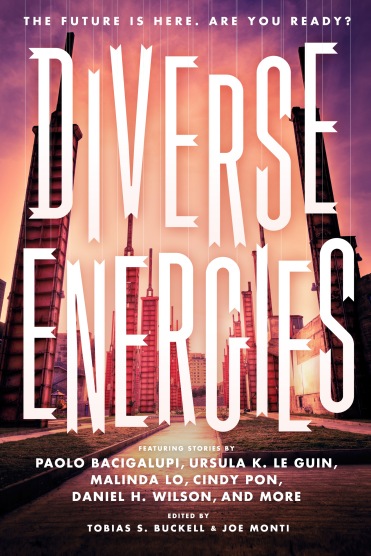
I will likely read my story from Dark Faith: Invocations and maybe a teaser from “Uncertainty Principle”, my story in Diverse Energies. But, who knows, I may change my mind :)

I don’t know if I’ve mentioned the Kindred Reading Series here before, but it’s the brainchild of Jenn Brissett, an African-American writer from Brooklyn. She wanted to create a reading series for genre writers of color since there’s a general misconception that POC don’t write or read science fiction, fantasy or horror.

A secondary goal was to raise money for the Octavia E. Butler scholarship which helps writers of color attend Clarion and Clarion West, two intensive writing workshops for new authors.

If you’re in the New York area the last week of September, please drop by!

My Favorite Fiction From July 2012

My Favorite Fiction From July 2012

Sorry I’m so late in posting July’s picks, all. Got caught up in work stuff, as usual. I’m also behind on my August reading. And with Worldcon coming up in a couple of weeks I might be late with my picks after that.

Speaking of WorldCon, one of the reasons I started these lists and keeping track of the stuff I read that I like is that I’m trying to be better about suggesting fiction for awards. Not just the Hugos, but also the Tiptree, Carl Brandon, World Fantasy and Million Writers Awards, to name a few. Remembering favorite short stories is harder for me than remembering favorite novels. Now I have all of the stuff I like cataloged over on Delicious with tags that will help me find appropriate stuff easier.

If anyone would like to join me in tagging and keeping up with loved stuff in this manner, my username on Delicious is ktempest.

And now, the fiction:

Visit my Favorite Fiction stack to see all the other short stories I’ve liked so far this year.

Putting a hard line between art, science, commerce, and creativity

Putting a hard line between art, science, commerce, and creativity

Earlier this summer I read a book by Jonah Lehrer called Imagine: How Creativity Works after reading a snippet of the book in a magazine or on a blog. Read the whole thing, loved it, recommended it to friends. And then a few weeks ago the world finds out that Lehrer did a very bad thing by making up or improperly smashing together quotes from Bob Dylan in said book.

It called all of the facts in the book into question (and since then people have found other errors in other chapters) and rightly cost Lehrer his job at the New Yorker and the respect of fellow writers and readers. I still think there are some good aspects of the book, but I recognize now that the conclusions have to be taken more as Lehrer’s conjectures or opinions.

In reading all the linked blog posts about this scandal, I came across this review of the book, published many months before said scandal. This was held up as an example of people calling shenanigans on Lehrer long before the Bob Dylan stuff was revealed. But as I read the review, I found it to be full of a huge dose of bullshit as well as what seems a real personal anger at Lehrer and all writers like him1:

IMAGINE is a collection of stories—all pop-science these days must be translated into stories, as if readers, like children, cannot absorb the material any other way2.

Lehrer does not see creativity or imagination as being intricately connected to art, or to science, or to anything that we would generally term “imaginative.” It is all about success. … Lehrer’s unwillingness to distinguish between these types of thinking, between art, science, and commerce, is discouraging. Inside or outside, the only place that finally interests Lehrer is the marketplace. …the problem of differentiating between artistic distinction and commercial distinction is especially problematic here. …if you are trying to explain the most ambitious and the most admirable exertions of human imagination and intelligence, some disaggregation, some discrimination, is necessary.

To start, I disagree with Isaac Chotiner’s assessment of Lehrer’s points and that all that interests him is the marketplace.

I heavily contest that one has to distinguish between art, science and commerce when in a discussion of creative thinking.

I always think of the book A Beautiful Mind when stuff like this comes up. It’s about the life of John Forbes Nash, the brilliant mathematician who struggled with paranoid schizophrenia for many years. In the prologue, the author recounts a day when a friend of Nash’s came to visit him in the hospital.

The friend asked: “How could you, a mathematician, a man devoted to reason and logical proof… believe that extraterrestrials are sending you messages?”

Nash’s answer: “Because the ideas I had about supernatural beings came to me the same way that my mathematical ideas did. So I took them seriously.”

As a writer, I often get flashes of insight or inspiration that seem to come from a part of my brain not entirely connected to the conscious part I’m aware of. I love when this happens because it usually leads to great stories. When I read that quote I realized for the first time that this happens to scientists as well.

Not that all great scientific discoveries are the result of this, but that ideas that then collide with your knowledge, understanding and experience come from a part of the mind that’s not readily accessible (like memory) happens not just to artists was very eye-opening for me. It made me realize that art and science aren’t on opposite ends of a spectrum.

Thus, I roll my eyes at Mr. Chotiner and his disdain for narrative and his assertion that just can mix up art and science and commerce and stuff because REASONS.

Whatever Lehrer’s crimes with this book, this isn’t one of them.

Thoughts?


Footnotes

  1. I found that many journalists and older writers had a huge hate hard-on for Lehrer for years. They are way too gleeful over his downfall. []
  2. Dude, narrative is a building block of our culture. It’s not just for children. If you don’t understand that, how can I trust you to review books, even of the non-fiction variety? []

Coming Soon: My stories in Dark Faith: Invocations and Diverse Energies

Those of you who view the blog proper may notice a couple new covers on the sidebar. I have stories in two anthologies coming out this fall and I’m very excited about both.

Dark Faith Invocations

The first one to come out will be Dark Faith: Invocations. From the Apex website:

Religion, science, magic, love, family — everyone believes in something, and that faith pulls us through the darkness and the light. The second coming of Dark Faith cries from the depths with 26 stories of sacrifice and redemption.

My story is “The Birth of Pegasus”. The full TOC is here and includes such awesome authors as Nisi Shawl, Jeffrey Ford and Tim Pratt. It launches at WorldCon in Chicago. If you won’t be there but want to pre-order a copy, click here. (You can get 10% off with coupon code: DFBradford)


Next is Diverse Energies, a YA dystopian anthology where all the stories feature characters of color. It will be out in October. I’m sharing a TOC with Ursula K LeGuin. I have not yet stopped doing the boggie about that.

You can’t pre-order Diverse Energies yet but I’ll let you know when you can.

What do you think of the covers?

NYC Group Writing Evenings?

NYC Group Writing Evenings?

I don’t get to have many group writing days, anymore, partially due to me not organizing them and the folks who used to do them with me don’t as much, anymore. Or they’ve moved away1. But now that I have a semi-regular schedule again that does not involve working into the night for no good reason, I’d like to try having them again.

During NaNoWriMo I organized a big write-in at Vagabond Cafe and really enjoyed it. Wondering if people in NYC would be interested in weekly write-ins. Perhaps not on such a large scale as NaNo ones, but groups of 5 – 10 folks all dedicated to writing for an hour or two together on a regular-ish basis. I’m sure we can accommodate more if more people are interested and show up.

Vagabond is a good location if we have a smaller group and want to do Tuesday since that’s the night they’re slowest and have no live music. For other days (Monday, maybe Thursday?) I suggest a new cafe called Irving Farm on the upper west side. They have a huge space in the back and are often very empty in the evenings. They serve beer and wine, which is always a bonus.

The kind of writing evening I envision is one where people trickle in for the first half hour, get drinks, food, etc. and chat a bit, then we get down to the SRS bizness of writing. No talking, the whole thing. Maybe we’d do a no talking, heads down sprint in 30 minute chunks then take breaks.

I’m open to ideas about how the writing evening should be structured and any other details. Discuss in the comments and let me know if you’re interested!


Footnotes

  1. Eugene! []

My Favorite Fiction From June 2012

June was a really good month for fiction! Must be all that summer reading we’re all expected to do. I didn’t get very far in my novel reading this month, but I did start on The Shadowed Sun by N. K. Jemisin, Redshirts by John Scalzi, and continue working through Throne of the Crescent Moon by Saladin Ahmed. I also picked up Ancient, Ancient  by Kiini Ibura Salaam.

Visit my Favorite Fiction stack to see all the other short stories I’ve liked so far this year.

Mental Noodling About Color, Ancient Peoples, and Alien Races

Mental Noodling About Color, Ancient Peoples, and Alien Races

Do any of you out there ever listen to RadioLab, a radio show that broadcasts on NPR stations? It’s a really fabulous show and podcast that’s best described as similar to This American Life but with stories about science and cool stuff instead of just about people’s inner lives. Except the explorations of science and geeky stuff often also includes stories of people’s inner lives. It’s a pretty sweet show.

The most recent episode is called Colors and is an exploration about a bunch of stuff about color. I know, what a surprise. My favorite section is the last one called “Why Isn’t The Sky Blue?” and delves into why the descriptions of color in Homer’s The Iliad and The Odyssey are so… off. The basic explanation is that ancient people saw fewer colors than we see even though they had the physical ability to see more1.

When I first listened to this show I geeked out a bit because I remember hearing this same thing in class back at NYU. How it starts with a long-ago British prime minister noticing that Homer never describes the sky as blue and snowballs into an exploration of how colors come into the human consciousness. My teacher at the time, Scott McPartland, said that the ancient Greeks didn’t see all colors, even though they existed, because they didn’t yet have the imagination to see them. The scientists interviewed on RadioLab have different explanations, but I like Scott’s better.

Scott also stated that two of the traditional rainbow colors are completely made up. That would be Indigo and Orange. These in-between colors were invented to make 7 colors, as 7 is a more perfect or spiritual number.

Yes, this assertion is probably arguable. I remember we argued about it in class a lot. Especially about orange. Apparently before oranges were orange (which they’re bred to be), they were yellow. So we invented oranges to justify orange as a legit color. Fascinating.

Anyway, I bring all this up not just because you should listen to RadioLab or argue with me about the realness of Orange and Indigo, but because I think this is an interesting bit of knowledge to keep in mind if you’re writing about an ancient people. How does your writing change if you can’t use the entire rainbow of colors? Not being able to describe the sky as blue? Or a berry as red or purple? Or the grass and leaves as green? How does that change how your characters see the world and relate to it?

Another cool thing mentioned earlier in the show is that some animals and insects have the ability to see thousands and millions more colors than we can. I’m toying with the idea of an alien race that can see far more colors than we can and how that affects how they relate to us. There is always an assumption that humanoid races pretty much see how we see, but even on our own planet there is a wide range of color seeing ability, thus it’s less likely to be homogeneous across worlds.


Footnotes

  1. Listen to the entire show for an explanation of how our eyes see color. []

My Favorite Fiction From May 2012

I came home from WisCon 36 with a big to-read pile (though these days it’s less of a pile and more of a list on my Nook) and so June’s favorite fiction list may include less short stories and more novels. Also, I don’t think I scooped every new May story into Readability, so I’ll probably a have few more published last month in the next list.

One last thing — I notice that Rahul Kanakia keeps popping up everywhere and I must say I’m super pleased about that. I’ve liked everything I’ve read by him so far. If he’s as prolific as he seems, I will have plenty to catch up on over the next few months.

Visit my Favorite Fiction stack to see all the other short stories I’ve liked so far this year.

Interstitial Arts Foundation Salons Reborn!

Interstitial Arts Foundation Salons Reborn!

Just posted this on Facebook, but I know not everyone is on Facebook (or wants to be) so I’m posting it here as well. Feel free to link to this, tweet, share, tumble or copy the text of this post to your own blog.

You don’t have to RSVP to the Facebook event in order to attend. Just show up :)


You are cordially invited to the Interstitial Arts Foundation’s first monthly salon to be held in New York City on June 26th and every 4th Tuesday thereafter.

What is a Salon?

Literary and artistic salons started back in 17th century France, when inspiring hosts and hostesses gathered “stimulating people of quality” together to refine their taste and increase their knowledge through conversation. Today there may be fewer wealthy patrons willing to host an event in their townhouses, but there is always a need for artists to meet other artists, to explore other circles of creative influence, to cross borders.

Our salon aims to bring together writers, visual artists, musicians, performance artists, crafters, academics and other people of quality in New York City for a relaxed evening of conversation.

Who Are The Hosts?

The Interstitial Arts Foundation is a not–for–profit organization dedicated to the study, support, and promotion of interstitial art: literature, music, visual and performance art found in between categories and genres — art that crosses borders.

IAF members will wear Host badges, so if you have any questions about the salon or the organization or you just need someone to safely begin a conversation with, you can find us easily.

Where & When?

The Vagabond Café @ 7 Cornelia Street, Tuesday June 26, 7pm to 10pm – drop in any time.

Vagabond is the kind of café one would expect to find in the West Village, especially if you’re a writer, student or musician, but rarely seen these days due to the proliferation of Starbucks-like entities. It’s a cozy spot where one can find live music Wednesday – Saturday evenings, beer, wine and mead every evening, and a long list of excellent crepes at all times.

Should I Bring Anything?

Calling cards, business cards, postcards, CDs or other things you can hand people to remind them that they met you and where they can find your work.

If you’re a musician, bring your MP3 player/iPod or a USB key with your music and we’ll play it during the salon.

If you’re a visual artist, bring digital images of your work on a USB key and we’ll add it to the slideshow that plays during the salon.

What If I Can’t Make It This Time?

No worries! We’ll be hosting a salon every month on the 4th Tuesday, usually at Vagabond. To get reminders, please join our Facebook group or subscribe to the IAF Salons in NYC mailing list.