Inspiration | Resonance: Cellist Zoe Keating

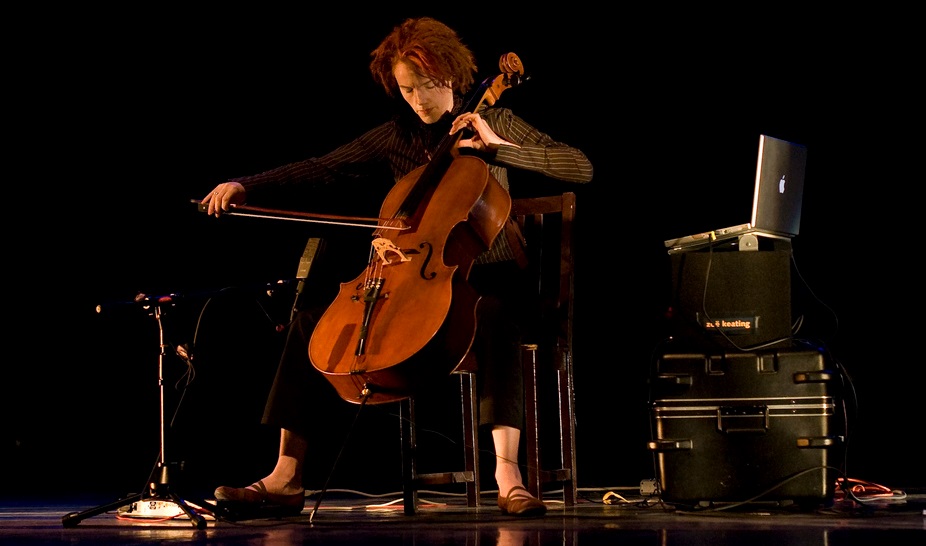
Zoe Keating at the San Francisco Electronic Music Festival

A recent conversation with N. K. Jemisin made me realize that I have not been vocal enough about my love for musician Zoe Keating even though I’ve been a big fan for over four years. She’s one of my go-to artists when I need writing music that sets a mood or fades into the background just enough to let me work but not enough that I don’t actively enjoy it. Other than just loving the sound, I also geekily enjoy how Zeating makes music. It’s very techie.

The first time I heard Zeating’s music was on the RadioLab podcast titled The Quantum Cello, and that’s how I think of her stuff: quantum music. Using MIDI recording tools and a laptop, Zeating overlaps repeating phrases to create multilayered music all from the same instrument. It’s hard to grasp how awesome this is when listening to a recording because it’s easy to create layered music in a studio. Keating does it live. She records each phrase as she plays it, then the laptop repeats it back (controlled with a petal) while she plays and records another bit. The layers build and build into ever more complex interactions. Watching this happen in real time is more amazing than I can recount.

The other thing I love about Zeating’s music is the wide variation of sound she gets out of a cello. There are several tracks where, if I didn’t know better, I would swear a piano or a whistle or a flute was involved.

The only sadness with being a Zoe fan is that she doesn’t produce new albums all the time. Her last one, Into the Trees, came out in 2010. Before that she put out two EPs in 2004 and 2005. I can’t very well complain since she’s a label-less indie artist and thus can’t just spend all of her time composing new stuff for me (uh, I mean, for all her fans…). I am pleased to see her music getting attention all over the place. I started hearing it as interstitial music between news segments on NPR’s Morning Edition and All Things Considered a few years ago. The Elementary staff and producers love her stuff, too, and so her tracks are all over that show.

You can buy her EPs and album from her website or on iTunes. I suggest buying them all, but if you start with One Cello x 16: Natoma you’ll get a good feel for her overall style. If you listen to the EPs and album in order you’ll note that her music gets more and more complex as she goes on. It makes me excited for what she’ll produce next.

Another kind of backup

Viggo Mortensen's Journal

New post over on the tech blog that will be of interest to you writer types:

“As I was in the process of moving from one house to another… someone broke into the passenger side window of my car and grabbed the backpack containing several notebooks I’d filled, since early 2001, with handwritten stories and poems. The backpack also contained a couple of journals, two screenplays, my passport, and two half-read books. The hardest losses were the stories and poems in the notebooks. I had been looking forward, in particular, to reviewing and fine-tuning hundreds of pages of, for me, uncharacteristically long and unguarded poetry that had been written during a series of very quiet nights spent in the Sahara Desert in late 2002.  

“…I spent a lot of time and effort in the following weeks scouring my part of town, looking through trash cans and alleyways, offering no-questions-asked rewards, doing anything I could think of to find what was irreplaceable for me and probably completely useless to whoever had stolen it. Finally, I let most of it go…”

–Viggo Mortensen

The specific thing that made me recall that story was testing Evernote’s Page Capture feature. … The idea of scanning a paper journal to a digital file isn’t exactly new. But with smartphones being so wide-spread and the cameras in them getting better and better, I wonder if it’s now just convenient enough that writers would spend a couple of minutes every day adding their journals to Evernote and if that would end up being an effective backup system?

Click here for the full post & discussion.

Utopias In Literature (Scholar & Feminist Conference 2013)

Utopias In Literature (Scholar & Feminist Conference 2013)

This year’s Scholar & Feminist Conference theme is Utopia, and I’m honored to be leading a workshop about Utopia and Literature. I’m going to discuss mainly speculative fiction novels and short stories (thus the reading list below), explore how writers have handled the idea of utopia and dystopia, and discuss the ways writers can think about utopia going forward. I’m also going to get into how fiction handles utopia affects the reader and/or culture.

In preparation for this workshop I had some great conversations with other speculative fiction authors about utopia and dystopia so that I could incorporate their viewpoints into the discussion. I want to thank Justine Larbalestier, N. K. Jemisin, Rahul Kanakia, Nisi Shawl, Eileen Gunn, and Catherynne M. Valente for helping me expand and explore my own ideas about utopia by offering their own.

The ideas I will use as a jumping off point are:

  • Science fiction as a genre is well suited to utopias because it “explores our world by positing another one that works a bit differently.” (Eileen Gunn)
  • If utopia is an ideal, is there such a thing as an objective ideal? Can a utopia ever be a utopia for everyone? Or if you create a perfect society for one group, who then becomes dominant, does that mean the non-dominant group/s must be oppressed?
  • Utopia is relative. The utopias we see in fiction may work for one set of people but are dystopian for another set.
  • Many modern stories and novels are specifically dystopian in nature or are utopias that reveal themselves as dystopias. Why is this the modern mode of exploration?
  • What do the types of utopias we see in fiction reveal about the authors who write them and the society or culture they come from? The ideals they include and the ones they leave out speak to their point of view and what they value and don’t.
  • Is it possible to show a true utopia in fiction? One view is that fiction requires conflict, so the author must show the utopia to be flawed in some way. Another view is that the conflict doesn’t have to come from within the utopia itself but from outside. The point being not to show that the utopia is flawed, but that the outside forces are.
  • Utopia as positive text. Creating a positive text, be it a positive feminist text, positive womanist, positive toward the idea that people are equal and should be created with respect — can this be a form of utopian writing? What affect does this have on the reader, on culture?

The workshop begins at 12:25pm Eastern (3/2). You can follow what people are saying on Twitter about the workshop and the conference by checking out the hashtags #sfutopialit and #sfutopia. This post will evolve and grow as the workshop goes on and afterward as I incorporate what the workshop participants have to say. I’ve invited all of the people in the workshop to liveblog and Tweet as well as bring the discussion to the comments on this post. Even if you’re not in the workshop physically, I hope my regular readers will also offer their thoughts on utopia.

Very Selective Reading List

I will add links to all of these works later on. During the workshop I expect we will generate more stories and novels to include in this list.

  • Octavia Butler
    • Parable of the Sower
    • Parable of the Talents
  • Steven R. Boyett
    • Elegy Beach
      • N. K. Jemisin: Takes place 20 years after Ariel. The protagonist grew up in this world where magic works and science doesn’t, and he’s excited by the world’s magic. His father remembers the world as it was. It’s a utopia for the son, not for the father.
  • Suzy McKee Charnas
    • The Holdfast Chronicles (Walk to the End of the World, Motherlines, The Furies, The Conqueror’s Child)
  • John Crowley
    • In Blue” (short story)
      • Nisi Shawl: a future utopia, a socialist world. It’s hard to envision what a totally happy utopia can be. He does this, but from the point of view of someone who doesn’t get it. It’s not a perfect utopia for him but it is for everyone else.
  • L. Timmel Duchamp
    • The Marq’ssan Cycle (Alanya to Alanya, Renegade, Tsunami, Blood in the Fruit, Stretto)
  • Charlotte Perkins Gilman
    • Herland
  • Kathleen Ann Goonan
    • This Shared Dream
      • Eileen Gunn: This book posits an attempt at creating a utopia. Here’s the blurb I wrote for it: “What if you could travel through time to fix what is wrong with the world? The world would resist, and the very act of trying would create parallel worlds with their own problems. This wondrous book, the story of a handful of people who seek to alter the twentieth century to create a better future, acknowledges the inhumanity of war and yet celebrates the joys of music, art, friendship, and family. And it reminds us that the future is made by the children of the present. I loved this book, and I heartily recommend it.”
  • N. K. Jemisin
    • “Too Many Yesterdays, Not Enough Tomorrows” (short story)
      • Example of a relative utopia
  • Rahul Kanakia
    • Next Door” (short story)
      • Written from the point of view of a character who sees the world as dystopian, but when flipped to the antagonist’s POV could be utopian.
  • Ursula K. LeGuin
  • Kat Meads
    • Sleep
      • From the Tiptree Award website: This is a fierce, unrepentantly experimental, somewhat raw novel about motherhood in a highly gray utopia.
  • Marge Piercy
    • Woman on the Edge of Time
      • From the Tiptree Award website: Piercy not only creates a complex and intricate utopian vision, but tosses in a dystopia and an all too realistic real world as well. Connie Ramos is one of science fiction’s most genuine heroines. She has to be dragged, kicking and screaming, into utopia. The rest of us, at the end of the book, have to be dragged out.
  • Joanna Russ
    • The Two Of Them
      • Nisi Shawl: Secret agents across time go to this planet that’s been settled by people who are trying to set up a religious utopia based on Islam.
    • The Female Man
    • “When it Changed” (short story)
      • Takes place in the same world as The Female Man
    • “Houston, Houston, Do You Read”
  • Starhawk
    • The Fifth Sacred Thing
      • A post-apocalyptic novel depicting two societies, one a sustainable economy based on social justice, and its neighbor, a militaristic and intolerant theocracy.
  • Catherynne M. Valente
    • The Orphan’s Tales cycle (In the Night Garden, In the Cities of Coin and Spice)
  • Connie Willis

Anthologies

Would you like to nominate me for awards? I would not object.

Earlier this month when I posted my personal Best Of list of short stories for the year, I stated that I would like to see any of those works nominated for awards. This is very true. Later on I’ll also make a post about other folks or works I think deserving of nominations, including novels and such. But this post is all about me.

Yes, it’s completely selfish, blah blah. Moving on.

I had a handful of pieces published in 2012, both fiction and non. And since it’s all the rage to mention lately, I am eligible to be nominated for the Fan Writer Hugo based on my blogging and other non-professional publications, such as this piece that went up on io9.

As far as fiction, my story “The Birth of Pegasus” in Dark Faith: Invocations is under 7,500 and eligible for the Hugo, World Fantasy, and Nebula awards. My story “Uncertainty Principle” in Diverse Energies is over 8,000 words (I believe), so counts as a novelette for the Hugo and Nebula awards.

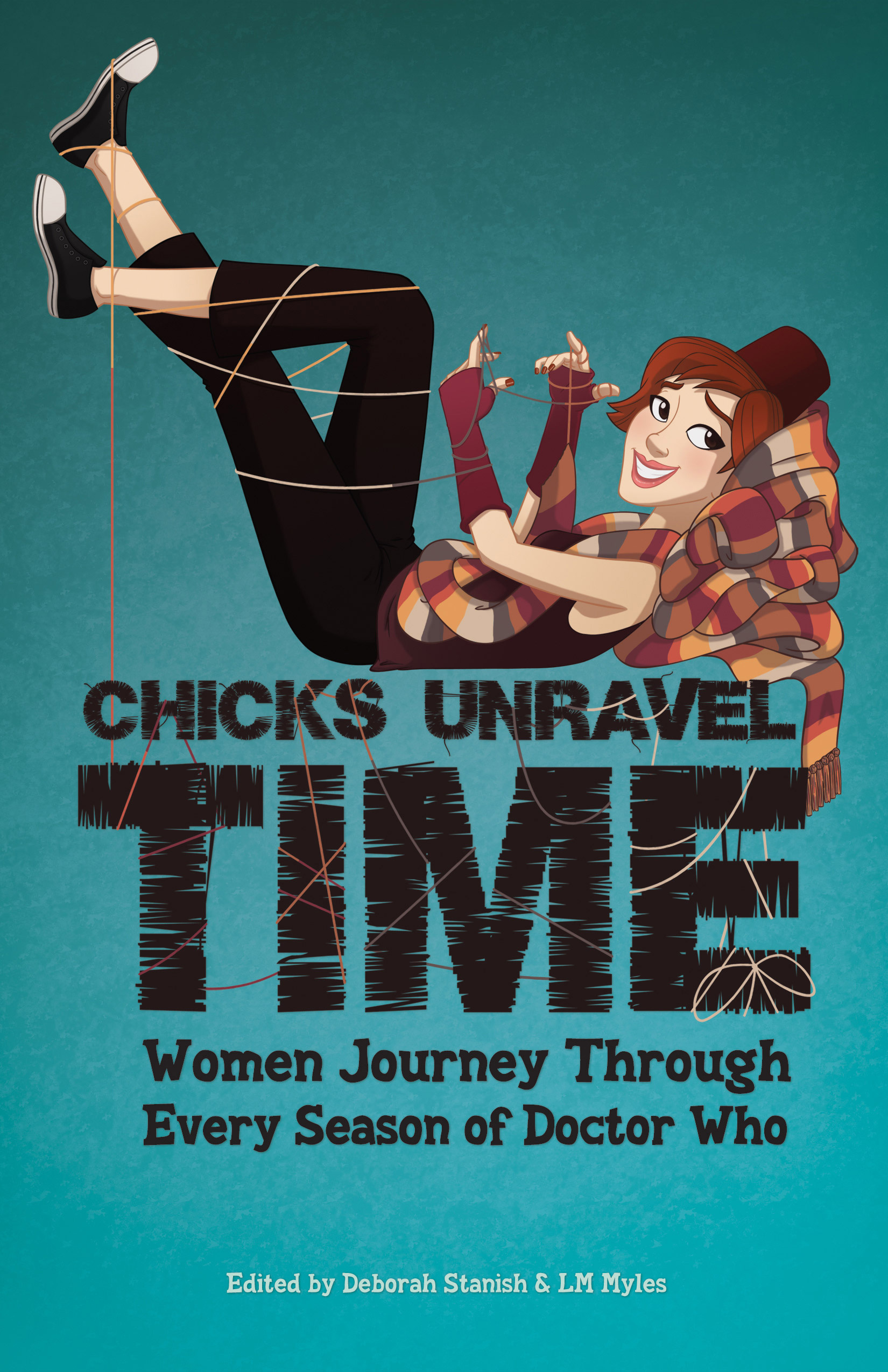
I would also love to see Chicks Unravel Time nominated for Best Related Work in the Hugos. That’s not just about me, but about all the really amazing contributors to the book and the editors who so wisely put it together.

So there you go, my award eligibility for 2012 stuff. Act on it as you will.

Chicks Unravel Time Readings & Signings in Worcester, MA & New York City

Chicks Unravel Time comes out in just a few days! Eee! I’m very excited. This book is bound to be really special. I’ve already had a sneak peek at a couple of the essays and I will predict that Doctor Who lovers will enjoy every page.

Some related events surrounding that. First, to get the bad news out of the way: I will not be attending Chicago TARDIS this year. I know, very sad! But family obligations + lack of money = no Tempest at the con. However, there will be a panel and signing and all of that with the fabulous editors, Deborah Stanish and L. M. Myles, plus many of the contributors. So if you can get to the con, go check it out!

Good news is that I will be at two more local reading/signing events!

The first is in Massachusetts near Boston, the second right here in my hometown of NYC. Details:

On Saturday, November 17th, Annie’s Bookstop of Worcester is holding an all-day Chicks Unravel Time event. I’ll be there alongside Jennifer Pelland, another of the book’s contributors, plus Katy Shuttleworth, cover artist extraordinaire. We’ll be reading, signing books, and hosting a roundtable discussion/Q&A. The store has promised us some surprises as well, and there will be tons of Doctor Who merchandise besides the book to peruse. So please do come!

Location: 65 James Street Worcester MA 01603

Time: 11/17 1PM – 6PM (come early for the reading/signings)

Next up: NYC Doctor Who shenanigans!

The Doctor Who NY group is hosting a reading/signing/book launch event at The Churchill, a pub that appears to be very fancy. This event is going to be loads of fun since both Deborah and Liz will be in town. Then Liz goes back to Scotland and we all cry.

There will also be copies and discussion of a couple of other recently published Doctor Who books that night as well. So overall it will be a big one for NYC Doctor Who fans.

Location: 45 East 28th St (near Park Avenue), New York, NY

Time: 11/28 6:30pm

Here’s a Facebook page for the event if you’d like to RSVP there.

Can’t come to either of these events? Sadness! But you know what you can do? You can pre-order your copy of Chicks Unravel Time. Yes, you can!


Story Notes: Uncertainty Principle (from Diverse Energies)

So I may have jumped the gun a bit early on the release date for Diverse Energies! However, according to the publisher, it is available now. And I’m seeing it in eBook format on Amazon and B&N, so I suspect print copies will be forthcoming very soon. Check your local, indie book sellers first!

I’m looking forward to hearing from people who read the stories to see what everyone thinks. Rachel Manija-Brown wrote a very thoughtful review here which then led into this post about dystopias and genre labels. One thing I find intriguing is that where Rahul Kanakia was told to write an SF action story, I was told to write a dystopia, yet his story is way more classic dystopia and mine has little shades of it but is more actiony.

Given the discussion on that post, I thought I’d give folks who read my story “Uncertainty Principle” a little peek into the background of it and my thinking around the whole dystopia thing.

As you might expect, these story notes are full of spoilers, so they’re going behind a cut. Don’t read unless you’ve read the story or don’t mind knowing some things about it! (also, ‘ware spoilers in the comments.)

Continue reading “Story Notes: Uncertainty Principle (from Diverse Energies)”

I Still Have That Dream

I Still Have That Dream

Been wondering why I’m in such a funk lately, then my calendar reminded me again this morning that today is my mother’s birthday. Her name is Marjorie Bradford and she died 13 years ago now, but the pain feels pretty fresh whenever I stop to think about her (which is often).

For many years after her death I tried to write a story that encapsulated how I felt about what happened and how much I loved her, but nothing ever came out quite right.

After she died, I had tons of dreams about her, but most of them had a common theme. In them, I was often aware that I only had a little bit of time to spend with her because I understood that she was sick and still dying. In some dreams she was very sick, in others almost completely healthy. A few times in my dreams I even asked her “How much time do we have?” and she’d say “Only a little while” or “A few days” or something.

It was as if, in my dreamscape, I was able to roll back the clock a little and revive her, but not completely and for good.

In mulling over why she almost always manifested in this way in my dreams led me to finally being able to write a story about her that did all of my memories and feelings and her impact on me justice. The story is “Elan Vital” and you can read or listen to it over at Escape Pod.

I’ve never read that story in public and probably never will because any attempt to do so will end up with me curling up in a ball sobbing. I don’t even read it to myself for that same reason.

However, when the story first appeared on the podcast I saw so many people praising the reading of it, I decided to listen to just a few minutes. I ended up listening to the whole thing. Mur Lafferty, as you may know, is an extremely talented reader. She did such justice to that story I can’t praise her enough.

Happy birthday, mom. I miss you and love you and I still have that dream.

I’m A Chick Who Likes To Unravel Time

Chicks Unravel Time cover
click me for a bigger version

I’ve dropped hints about this for a while, but now it’s official and on the record! I have an essay in the forthcoming Chicks Unravel Time, a follow up to the Hugo Award-winning Chicks Dig Time Lords. Woot! This is my last essay for books from Mad Norwegian Press, so I’m really glad it will be in such an awesome book.

This one is different to the first in that editors Deborah Stanish and L M Myles asked each contributor to consider a specific series of Doctor Who and to explore it in any way we liked. So, not every essay could be classed as “a celebration”, but they’re all written by women who clearly love Doctor Who and who have intelligent and deep thoughts on the show.

Also, the cover art is awesome! Katy Shuttleworth once again being all badass.

Here’s the full table of contents so you can get a taste of what everyone is talking about:

  • Regeneration – Shaping the Road Ahead by Barbara Hambly
  • The Doctor’s Balls by Diana Gabaldon
  • A Dance With Drashigs by Emma Nichols
  • No Competition by Una McCormack
  • Identity Crisis by L.M. Myles
  • The Still Point by Anna Bratton
  • For the Love of Tom by Sarah Lotz
  • Donna Noble Saves the Universe by Martha Wells
  • I’m From the TARDIS, and I’m Here to Help You: Barbara Wright and the Limits of Intervention by Joan Frances Turner
  • I Robot, You Sarah Jane: Sexual Politics in Robot by Kaite Welsh
  • Between Now and Now by Juliet E. McKenna
  • What Would Romana Do? by Lara J. Scott
  • The Women We Don’t See by K. Tempest Bradford
  • The Ultimate Sixth by Tansy Rayner Roberts
  • Maids and Masters: The Distribution of Power in Doctor Who Series Three by Courtney Stoker
  • Robots, Orientalism and Yellowface: Minorities in the Fourteenth Season of Doctor Who by Aliette de Bodard
  • David Tennant’s Bum by Laura Mead
  • Superficial Depth?: Spirituality in Season Eleven by Caroline Symcox
  • The Problem With Peri by Jennifer Pelland
  • All of Gallifrey’s a Stage: The Doctor in Adolescence by Teresa Jusino
  • All the Way Out to the Stars by Iona Sharma
  • Build High for Happiness! by Lynne M. Thomas
  • Nimons are Forever by Liz Barr
  • Ace Through the Looking Glass by Elisabeth Bolton-Gabrielsen
  • Hey, You Got Science in My Fiction! by Laura McCullough
  • Seven to Doomsday: The Non-Domestication  of Earthbound Doctor Who in Season Seven by Mags Halliday
  • Harking Back and Moving On by Jenni Hughes
  • Anything Goes by Deborah Stanish
  • How the Cold War Killed the Fifth Doctor by Erica McGillivray
  • Waiting for the Doctor: The Women of Series Five by Seanan McGuire
  • Timing Malfunction: Television Movie + the BBC Eighth Doctor Novels = A Respectable Series by Kelly Hale
  • Guten Tag, Hitler by Rachel Swirsky
  • Reversing Polarities: The Doctor, the Master and False Binaries in Season Eight by Amal El-Mohtar

There’s one essay for each series of the show, classic and current, plus the TV movie.

My essay is about Series 13. When Deb first asked me to be in the book and told me the premise, I loved the idea right away. I let her pick a series for me since I’m not very familiar with classic Who and she hoped to get some fresh perspectives on the older stuff.

At the time, the series I would have chosen for myself is #3 of the modern era. Deb rightly pointed out that my CDTL essay was pretty much an exploration of Series 3 through the lens of my love for Martha. The only other series I have many FEELS about is #4. After that my ability to deal with Doctor Who flies out the window.

The choice of Season 13 ended up being a good one. Tom Baker’s Doctor is the only one of the classics I’m familiar with. I’ve seen some of Series 12 and a few of his adventures with Romana. But I came into #13 fresh.

I won’t spoil the essay for you, but I will say that I was a little surprised at some of the things I found there, despite knowing in advance that I would see some problematic stuff. What I found very interesting, and only touched on a bit in the essay, was how much of new Doctor Who I saw in those old episodes. I can tell that some writers have been influenced by those episodes for good and for bad.

I now also have a full appreciation for how eye-roll worthy it is that the Doctor’s race is called the Time Lords, as if there are only men running around on Gallifrey. This plays out in interesting way during this series.

Chicks Unravel Time is out on November 13th, and you’d better believe that I’m going to remind you several times before the actual day. I should also note here that it’s almost a 100% done deal that I’m attending Chicago TARDIS over Thanksgiving weekend so I can take part in the panel about the book! I’m just waiting to see if I can get a press pass.

Until then, pre-order and spread the news!

Seanan McGuire on why she will not add rape to her stories to add “realism”

If you’ve been reading my blog long enough, you know my feelings about the way rape is used in most fiction. If you’re unaware or have forgotten, please click over to my post here, my post on ABW, and my post on Jeff Vandermeer’s blog about the subject.

The bottom line of each of those is that I really do not like it when authors decide to have their female (and it’s almost always female) characters raped for bullshit plot or character development “reasons”. The kind of writers who do this are generally not very good ones since they have to use cheap tricks in order to show that the female character is “strong” or the male character is “evil” or to wink and nod to any reader out there who might think that a female character could possibly ever get away with being smart and confident and badass without being taken down a peg.

I also get angry at this trope because I firmly believe that it contributes to rape culture in a big way. When the message from fiction is constantly that rape is inevitable, especially if you as a woman step outside of the box of what is acceptable, and that’s just how it is. Whenever I suggest that authors just NOT include rape as an inevitable consequence of being a woman in fiction, I get told that this is completely unrealistic.

Thus, I am not at all surprised that this happened to author Seanan McGuire:

Last night, I was asked—in so many words—when either Toby or one of the Price girls was finally going to be raped.

Not “if.” Not “do you think.” But “when,” and “finally.” Because it is a foregone conclusion, you see, that all women must be raped, especially when they have the gall to run around being protagonists all the damn time. I responded with confusion. The questioner provided a list of scenarios wherein these characters were “more than likely” to encounter sexual violence. These included Verity forgetting to change out of her tango uniform before going on patrol, Toby being cocky, and Sarah walking home from class alone1. Yes, even the ambush predator telepath with a “don’t notice me” field is inevitably getting raped.

When. Finally. Inevitably.

My response: “None of my protagonists are getting raped. I do not want to write that.”

Their response: “I thought you had respect for your work. That’s just unrealistic.”

Go and read the whole post, because everything that Seanan has to say in response to this nonsense is right on and should be read by every person ever, especially authors.

I’ve said this before and I will say it again: Writers, when you write fiction you get to create the world. Yes, even if are writing in the “real” world and not that of the speculative, you get to decide what happens to your characters and why. Spec writers in particular get to create stuff out of whole cloth, if they like. And more of them should choose not to bring rape into their narratives. Because if we want to create a world in which rape happens less, we need to show worlds where rape isn’t the inevitable consequence of being a woman.

Then maybe there won’t be readers out there who claim that no rape means a book is unrealistic. Because: really? Gross.


Footnotes

  1. Does it occur to anyone else that this person has thought way too much about the ways in which these characters may end up raped? If I were Seanan I would stay away from the fan fiction for a bit… []

Diverse Energies Launches Today!

Diverse EnergiesThe Diverse Energies anthology is now officially available in fine bookstores near you. Find it at a local, independent bookstore through IndieBound or grab it from Barnes & Noble or Amazon. I haven’t yet seen any eBook versions, but I think you’ll be able to find them through GoodReads.

Diverse Energies has 11 stories on a dystopian them for YA readers. Editors Tobias S Buckell and Joe Monti wanted to create an anthology full of characters that reflected the diversity they see in their own lives, so all of the protagonists are of color. Many of the authors are of color as well, and the stories well up from our perspective and experiences.

My story, “Uncertainty Principle”, features a girl of mixed Latina and Middle Eastern background who finds that the world changes around her — big changes that no one else but her notices.

Here’s the full TOC:

“The Last Day” by Ellen Oh
“Freshee’s Frogurt” by Daniel H. Wilson
“Uncertainty Principle” by K. Tempest Bradford
“Pattern Recognition” by Ken Liu
“Gods of Dimming Light” by Greg van Eekhout
“Next Door” by Rahul Kanakia
“Good Girl” by Malinda Lo
“A Pocket Full of Dharma” by Paolo Bacigalupi
“Blue Skies” by Cindy Pon
“What Arms to Hold” by Rajan Khanna
“Solitude” by Ursula K. Le Guin

Thus far I’ve seen many positive reviews of the book from advance readers. The Kirkus review even mentions my story:

Readers will find poor children working in mines and factories, a have-not yao boy kidnapping a rich you girl and a girl reeling as the world inexplicably changes around her, and no one else notices. Although many stories imagine bleak futures, their tones are refreshingly varied. Daniel Wilson’s tale of a robot attack at a frozen-yogurt shop takes the form of an almost-comical police-interview transcript. Ursula K. LeGuin’s “Solitude” is a sweeping, nostalgic epic. K. Tempest Bradford’s “Uncertainty Principle” is a character-driven time-travel tale. Understanding many of the stories takes patience: Readers are plunged quickly into complex worlds, and exposition often comes slowly.

There are a couple of other reviews that mention it as well, but everything is full of spoilers!

If you read the book and like it, please let folks know and leave reviews where possible. Also, buy it for the young persons in your life who like SF or like to read anything and everything.